
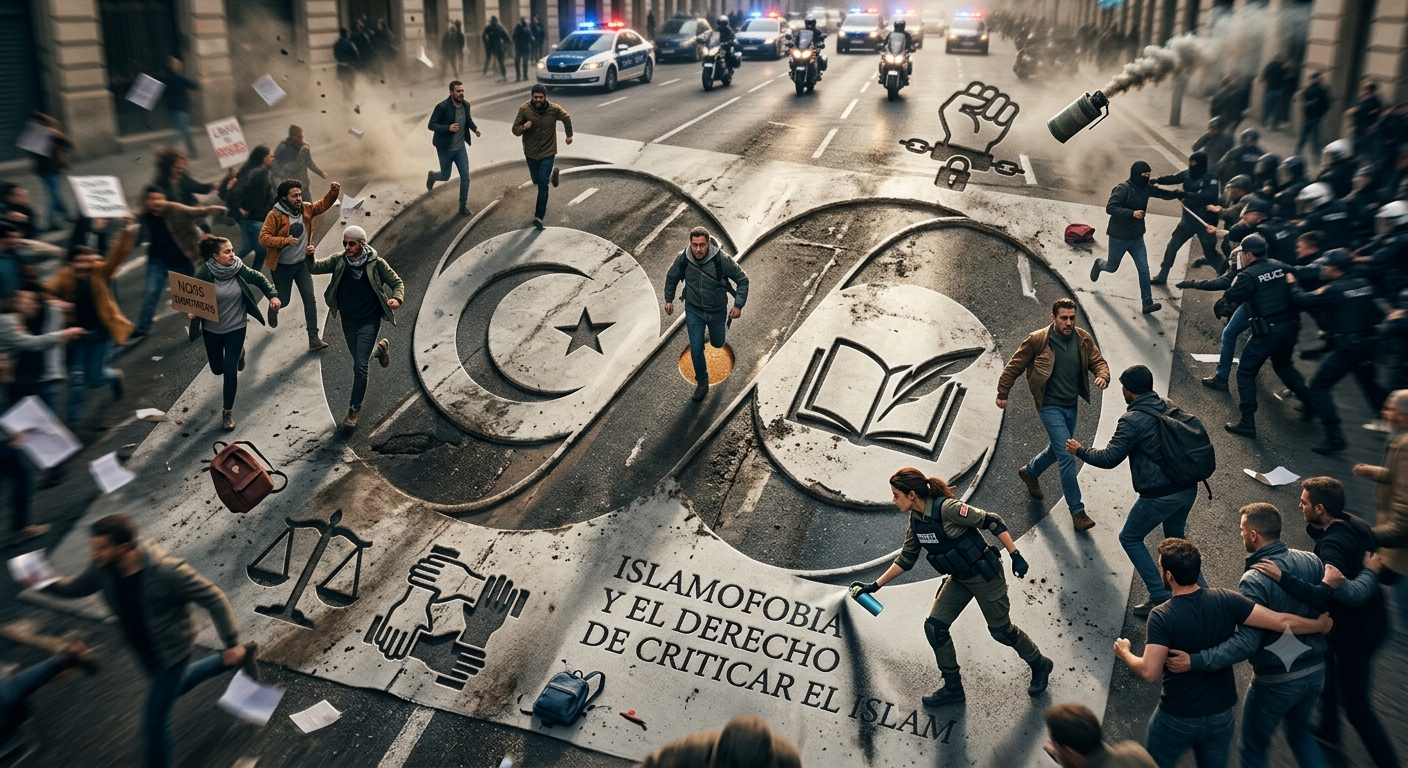
“Islamophobia!”: History, Use, Abuse, and the Fine Line Between Protecting People and Shielding Ideas
In the vocabulary of modern political discourse, few words have risen as meteoricly as “Islamophobia”. It went from being an almost unknown sociological term to becoming an all-purpose wildcard in almost any debate about religion, integration or geopolitics.
It is used to denounce unacceptable attacks against Muslim citizens, but also — and this is where things get complicated — to try to shut down any critical debate about religious doctrine, customs or laws.
Where did this curious word come from? When did we cross the line between protecting people and protecting dogmas? And above all, how can we get out of this predicament without sacrificing either tolerance or freedom of expression?
1. Where Does the Word Come From?
Although some people might think it was invented the day before yesterday, the term has been around for decades. It began gaining academic traction in the late 1990s, notably with a famous report published by the British Runnymede Trust in 1997, designed to draw attention to rejection, discrimination and unjustified prejudice against people of Muslim faith in the West.
The term “Islamophobia” began to be used more widely during the final decades of the twentieth century and became much more prominent after the terrorist attacks of 11 September 2001.
Since then, governments, international organisations, universities and the media have used it to describe attitudes of prejudice, hostility or discrimination towards Muslims or people perceived to be Muslim.
However, there has never been a single definition accepted by everyone. And that is where many of the problems begin.
2. Use and Abuse: The “Protective Shield” Against Criticism
To understand the heart of the problem, we need to distinguish between two concepts that are often bundled together for reasons of self-interest:
Legitimate use: Denouncing racism, violence, marginalisation or collective stereotypes that Muslim citizens face in their everyday lives.
Verbal abuse of power: Labelling anyone who questions the compatibility of certain religious precepts with European values as “Islamophobic”, including those who satirise sacred figures or Muslim women who fight religious patriarchy within their own communities.
When the word becomes a ready-made label for cancelling dissenters, the result is damaging: prior censorship — or self-censorship — emerges out of fear of social stigma. If criticising an idea automatically makes you a “fanatic”, democratic debate comes to an end.
3. The Direct Clash with Freedom of Expression
Within Europe’s democratic and Enlightenment tradition, the rules of the game are clear: people have rights and deserve protection; ideas, philosophies and religions do not.
Citizens must be protected from persecution, but no ideology — whether Christianity, Marxism, liberalism or Islam — has the right to be shielded from criticism, analysis, debate or even ridicule through humour or satire.
Treating Islam as an untouchable doctrine that cannot be subjected to the same scrutiny as other religions or political ideologies is not respect. It is a form of paternalism tinged with condescension that ultimately harms reformists and secular thinkers within Muslim communities themselves.
A Very Common Confusion
Three distinct concepts are often mixed together.
Criticising Islam: This means analysing, questioning or disagreeing with religious ideas. It is part of freedom of expression.
Discriminating against a Muslim: This means treating someone worse solely because of their religion or because they are believed to belong to that religion. This violates the principle of equality.
Inciting hatred: This involves promoting violence, persecution or discrimination against individuals or groups. In many European countries, this can have legal consequences. Confusing these three categories makes debate more difficult and fuels polarisation.
4. What Solutions Are on the Table?
Untangling this issue does not require reinventing the wheel. It requires applying basic democratic principles firmly and without embarrassment.
A. Conceptual Clarity: Distinguishing Aggression from Debate
The terminology needs to be clarified. Terms such as “Judeophobia”, “Christianophobia” or “Islamophobia” are used to describe hatred or discrimination against people because of their religion. Reserving the concept of discrimination strictly for acts against people makes it possible to protect individuals without shielding doctrine from criticism or satire.
B. Defending the Right to Blasphemy and Apostasy
Civil laws are not there to protect anyone’s religious feelings. Freedom of expression includes the right to offend or disagree with other people’s beliefs. No religious dogma should be entitled to a privileged legal or social status above individual freedoms.
C. Giving Reformists and Freethinkers a Platform
The misuse of the term “Islamophobia” particularly silences ex-Muslims, feminists and critical thinkers within the Islamic world, who are often branded “traitors” or “Islamophobes” for pointing out contradictions within orthodoxy. Supporting their voices is essential to breaking the conservative monopoly over the debate.
Conclusion: Protecting citizens from intolerance and hatred is an unavoidable democratic duty. But protecting religions or ideologies from scrutiny and criticism is the first step towards censorship. The challenge for a mature society is to keep the door open to everyone while ensuring that no idea wears a crown at the debating table.