
Can a Religion of the Seventh Century Coexist with Twenty-First-Century Equality?
When Inequality Becomes the Rule
Imagine two siblings who lose their father. Both are adults, both have received an education, both work, and both have the same economic needs. Yet, when the family inheritance is divided, the son may receive twice as much as the daughter.
Now imagine a Muslim couple: a man and a woman who love and respect each other and share the same values. If he is Muslim and she is Christian, Islamic jurisprudence generally permits their marriage. If the roles are reversed and she is Muslim while he is Christian, traditional Islamic law prohibits the union.
Consider also a woman who wants to divorce, exercise legal guardianship over her children, or marry without the intervention of a male guardian. Depending on the country and the applicable legislation, she may face obstacles that a man would not have to overcome.
We are not talking merely about family customs or cultural differences. We are talking about religious rules that, in many legal systems, have become laws governing the lives of millions of people.
The question is unavoidable: Can genuine equality between men and women exist when the law grants different rights according to sex?
Islam is not a uniform entity. There are different movements, schools of jurisprudence, reformist interpretations, and millions of Muslims who defend equality between men and women. There are also Muslim-majority countries that have introduced significant reforms in women’s rights.
However, recognising this diversity should not prevent us from critically examining traditional rules that establish differences between men and women.
This article analyses these rules, their religious justifications, their presence in current legislation, and their relationship with the principles of equality, individual freedom, and personal autonomy that characterise European democracies.
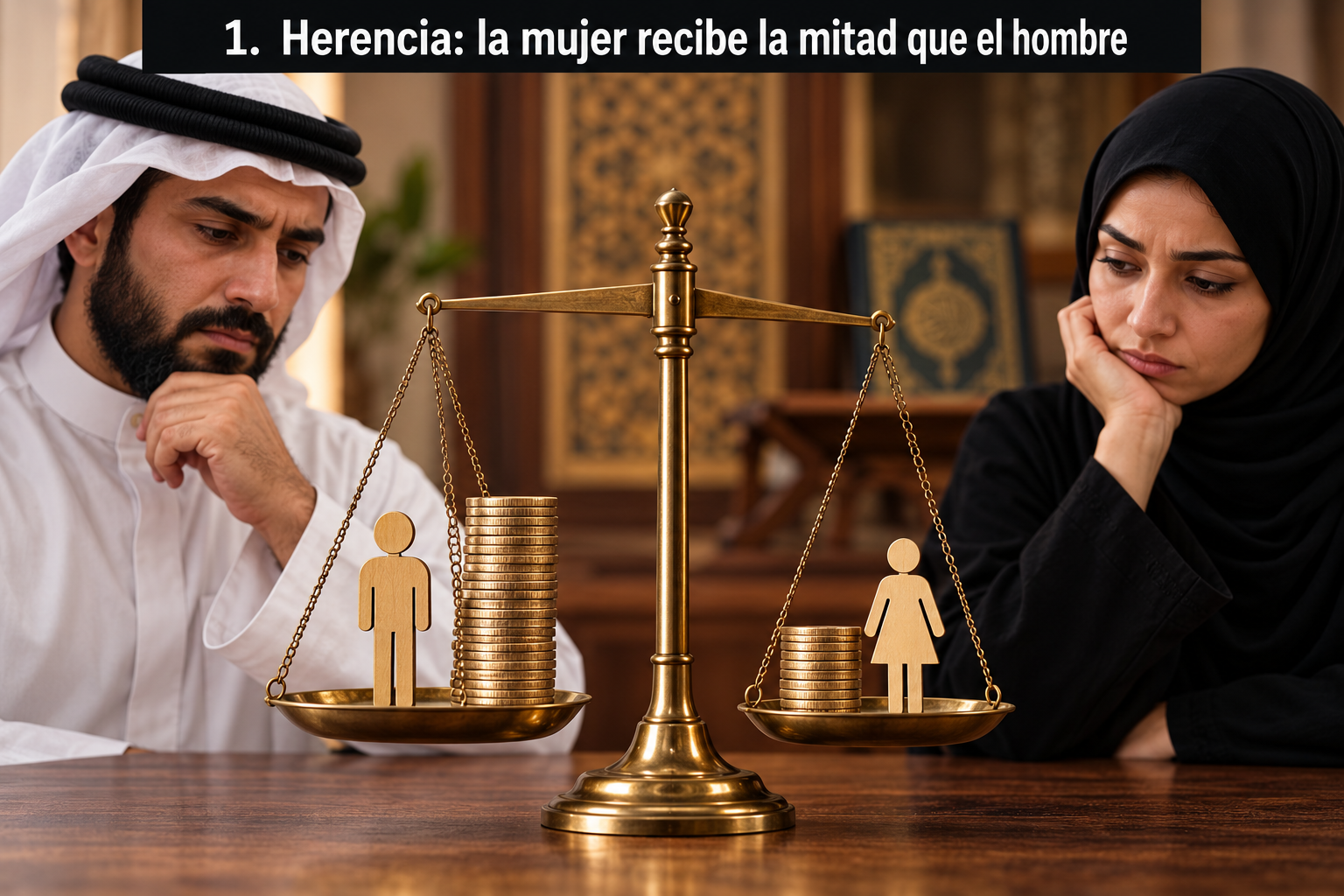
1. Inheritance: Why Does a Daughter Receive Half as Much as a Son?
What does the rule establish?
Verse 4:11 of the Quran establishes inheritance rules under which a male child receives a share equivalent to that of two female children.
This is an explicit rule of traditional Islamic inheritance law.
What is the traditional justification?
The classical explanation is based on the distribution of family financial responsibilities.
According to this interpretation, a man has a duty to provide financially for his wife and children, pay the marriage dowry, and assume certain economic responsibilities. A woman, by contrast, retains her own wealth and does not have the same obligation to support her husband.
From this perspective, a man receives a larger inheritance because he is also expected to bear greater financial burdens.
This explanation reflects the traditional logic of the system: different rights and obligations for each sex.
What is the problem?
The justification depends on a particular family model: the man as the financial provider and the woman as an economically dependent person.
But what happens when a woman works, supports her children, cares for her parents, or contributes more money to the family economy than her brother?
What if the brother does not work, while the sister has spent years caring for their sick parents?
The inheritance rule does not automatically adapt to these circumstances. The distribution is determined by predefined legal categories, not by each person’s actual financial contribution.
Furthermore, the traditional obligation of men to support their families is not always fulfilled in practice, while many women make decisive contributions to household finances.
Is this rule still in force today?
Yes, in numerous countries and jurisdictions that apply Islamic inheritance law. Documented examples include Egypt, Saudi Arabia, Morocco, and Jordan.
The OECD has documented that general inheritance rules in Egypt, Jordan, Morocco, and Tunisia have maintained differences between the inheritance shares of men and women. Saudi Arabia also applies Islamic inheritance rules under which sons receive twice as much as daughters in certain circumstances.
Criticism from the perspective of European values
The problem is not denying that family members may have different financial responsibilities. The problem is making a person’s sex a legal criterion for determining how much property they can inherit.
From the perspective of legal equality, two children should have the same inheritance rights simply because they are children, without their sex automatically determining the value of their shares.
If a society considers it unfair for women to have fewer financial obligations, it can reform family responsibilities. What is difficult to justify from the standpoint of contemporary equality is maintaining a permanent inequality in property rights in the name of a family model that no longer reflects the reality of many households.
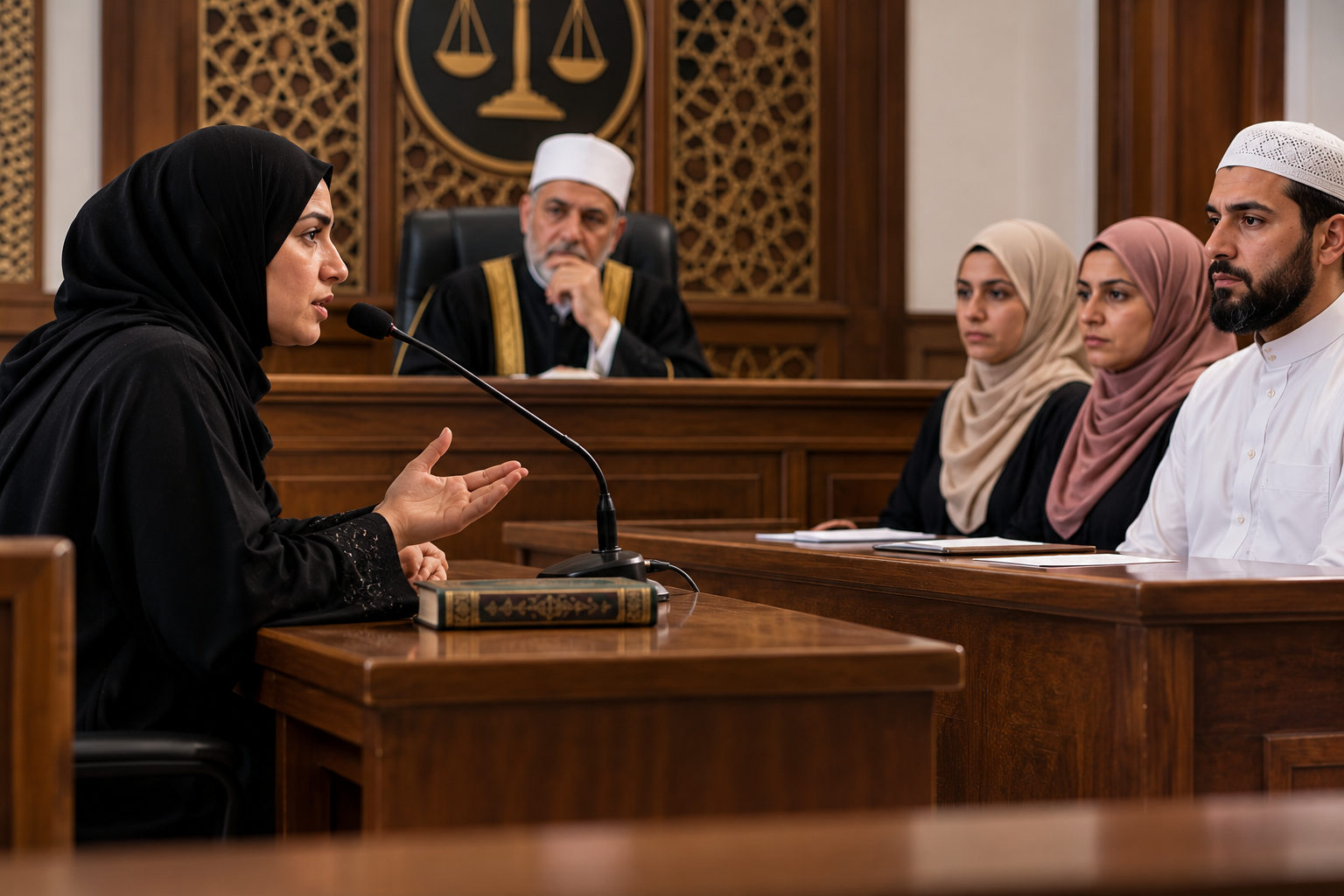
2. Testimony: Is a Woman’s Word Worth Half as Much as a Man’s?
What does the Quran actually say?
Verse 2:282 of the Quran, which concerns the formal recording of certain debts, provides for two male witnesses or, if two men are not available, one man and two women, so that one woman may remind the other.
This is one of the passages most frequently cited in debates about women’s testimony.
What is the traditional reasoning?
The most common explanation is that the presence of two women in this context is intended to provide an additional safeguard for accurate recollection in a financial transaction.
In the historical societies in which this interpretation developed, commercial and financial activities were frequently dominated by men. Some jurists considered that the division of social roles justified different evidentiary rules.
What happens to this justification today?
Women now participate in banking, commerce, public administration, scientific research, and virtually every professional field. Their ability to understand contracts or remember events cannot be determined by their sex.
If two people witnessed a transaction, the reliability of their statements should be assessed according to their knowledge of the facts, their consistency, and the other available evidence.
Does this rule still apply under current laws?
The situation varies considerably. Not all Muslim countries apply the same rules of evidence, and many modern judicial systems distinguish between civil, criminal, commercial, and religious law.
It would therefore be incorrect to automatically extend the rule in Quran 2:282 to every contemporary court. However, in some Muslim countries, women’s testimony may be assigned less legal weight in certain contexts.
Criticism from the perspective of equality
Justice should not start from the assumption that a woman needs another woman’s assistance to remember what happened, while a man can be considered a sufficient witness on his own.
Equality before the law requires credibility to be assessed individually, using criteria that apply to everyone.
Memory has no gender.
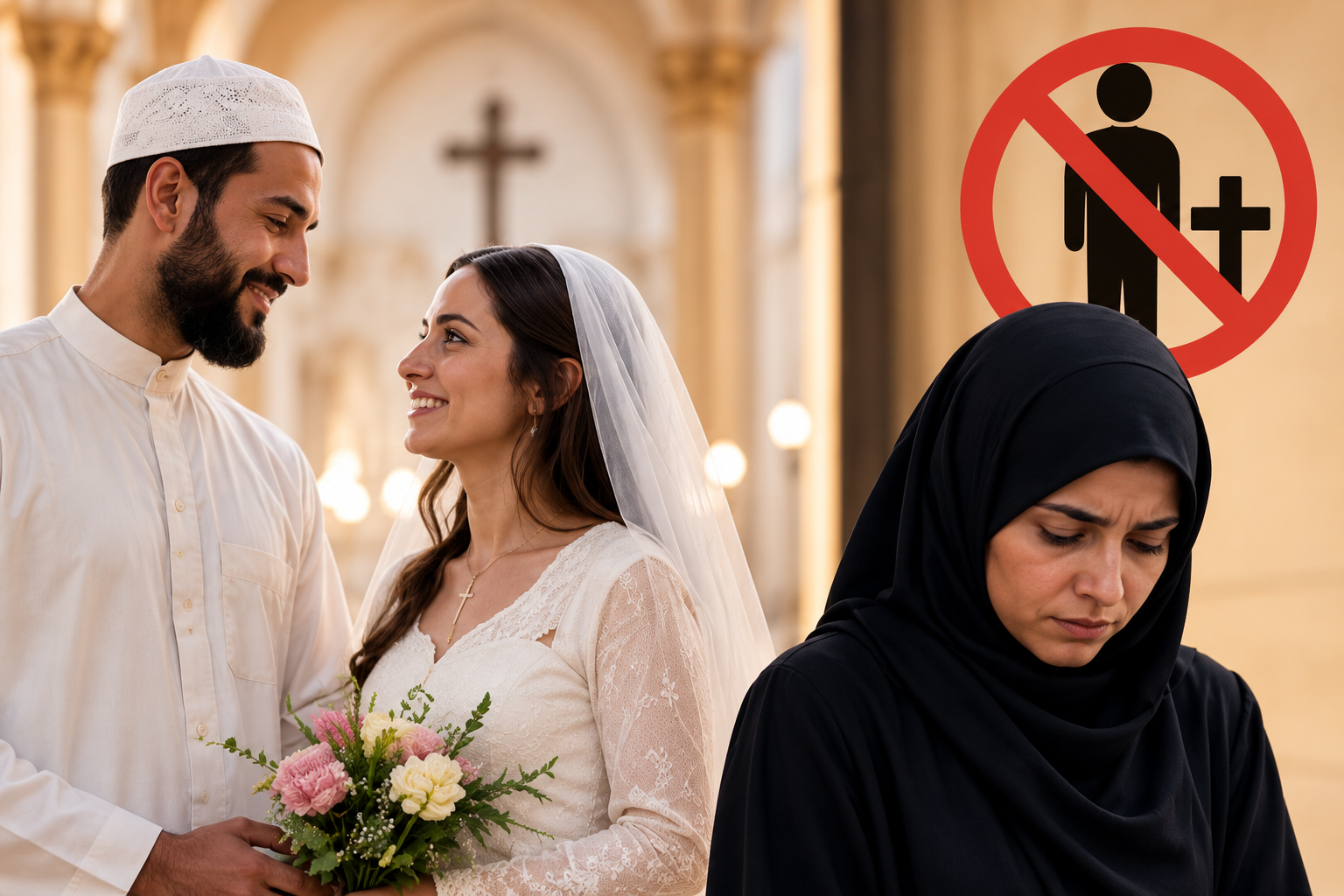
3. Interfaith Marriage: Freedom for Him, Prohibition for Her
What does traditional Islamic jurisprudence establish?
Classical Islamic jurisprudence generally permits a Muslim man to marry a Christian or Jewish woman, belonging to the so-called People of the Book, under certain conditions.
By contrast, it traditionally prohibits a Muslim woman from marrying a non-Muslim man, even if he is Christian or Jewish.
The distinction is not symmetrical: the man is granted a matrimonial option that is denied to the woman.
Why is it permitted for men but prohibited for women?
The traditional justification is associated with several factors:
Male authority within marriage: The husband was regarded as responsible for directing and financially supporting the family.
Protecting the religious identity of children: The assumption is that a Muslim father will maintain the Islamic identity of the household.
The patriarchal family structure: The husband’s religion is considered decisive in determining the religious orientation of the family unit.
Interpretations of Quranic verses concerning marriage to people of other religions, together with the subsequent development of Islamic jurisprudence, also influence these rules.
Does this still happen today?
Yes, in several countries that regulate Muslim marriage through personal-status laws based on Islamic jurisprudence. Syrian legislation, for example, has traditionally incorporated this prohibition. The specific rules of each country may also impose additional requirements concerning religion and the validity of marriages.
The contradiction with European values
In a liberal society, two adults should be free to choose whom they marry, provided that their consent is genuine and they meet the general legal requirements.
A woman’s religion should not restrict her ability to choose a partner while a man of the same religion enjoys greater freedom.
The prohibition also raises a question of autonomy: can a woman decide for herself which religion to practise, how to educate her children, and what commitments to make within her marriage?
The answer should not depend on whether she is a man or a woman.
If freedom of choice is a right, it must also apply to women who wish to marry outside their religious community.

4. Surnames: Why Is Family Identity Passed Down Through the Father Rather Than the Mother?
Imagine a child being born. The child has a mother and a father, both of whom have contributed to the child’s birth and both of whom form part of the child’s identity. Yet in certain family and legal systems, the paternal line occupies a privileged position when establishing a child’s lineage and family affiliation.
This issue may appear secondary, but it raises an important question: why should family identity be transmitted primarily through the man rather than equally through both parents?
What is the relationship between this tradition and Islam?
In Islamic legal tradition, there is a principle known as nasab, which refers to lineage and the recognition of family descent. In traditional interpretations, paternal lineage has particular legal importance because it determines matters such as kinship, inheritance, and certain prohibitions on marriage between relatives.
Verse 33:5 of the Quran establishes that people should be attributed to their fathers when their fathers are known. The passage concerns the attribution of lineage; it does not, in itself, establish a universal surname system equivalent to those used in modern European countries.
This distinction is important: classical Islamic law gives considerable legal importance to paternal lineage.
Naming and surname systems differ from country to country. In some places, a person’s name is followed by the father’s name and those of other ancestors. In others, hereditary family surnames are used, and civil registration rules may allow different options.
What is the traditional reasoning?
The underlying logic is to identify family membership through a legally recognised line of descent. Historically, this identification had consequences for inheritance, financial obligations, kinship, and family organisation.
In a patrilineal system, the father’s line occupies a central position in the transmission of lineage. The mother is recognised as a parent, but her family line does not always have the same legal significance.
This structure is not exclusive to Islam. It has also existed in European societies and other cultures. The difference is that, in certain Islamic legal systems, paternal lineage is linked to specific religious and legal rules that may restrict alternative ways of establishing descent.
Does this still happen today?
It depends on the country and on what is meant by carrying the father’s surname.
In many Muslim-majority countries, the patrilineal tradition continues to play an important role in names and legal lineage.
Criticism from the perspective of equality
The central issue is not to require every child to carry the mother’s surname. It is to ask why the paternal line should automatically take precedence when both parents contribute to their children’s lives and identities.
If a society recognises the mother and father as equally valid parents, it is reasonable to ask why family tradition should legally privilege one line of descent over the other.
Equality does not require every family to use the same surname system. It requires that women not be considered less important than men in transmitting family identity, and that the applicable rules do not deny them rights on the basis of sex.
The clash with European values
Europe does not have a single surname system either. Some countries allow parents to choose between different options, while others establish specific rules for children’s surnames. In Spain, legislation allows both parents’ surnames to be registered, with their order chosen by mutual agreement, subject to civil registration rules.
The relevant principle is that family identity should not be used to establish that the father has more rights than the mother.
The question is not why a child carries the father’s surname. The question is why, in certain systems, the paternal line must take precedence over the maternal line as a matter of law.
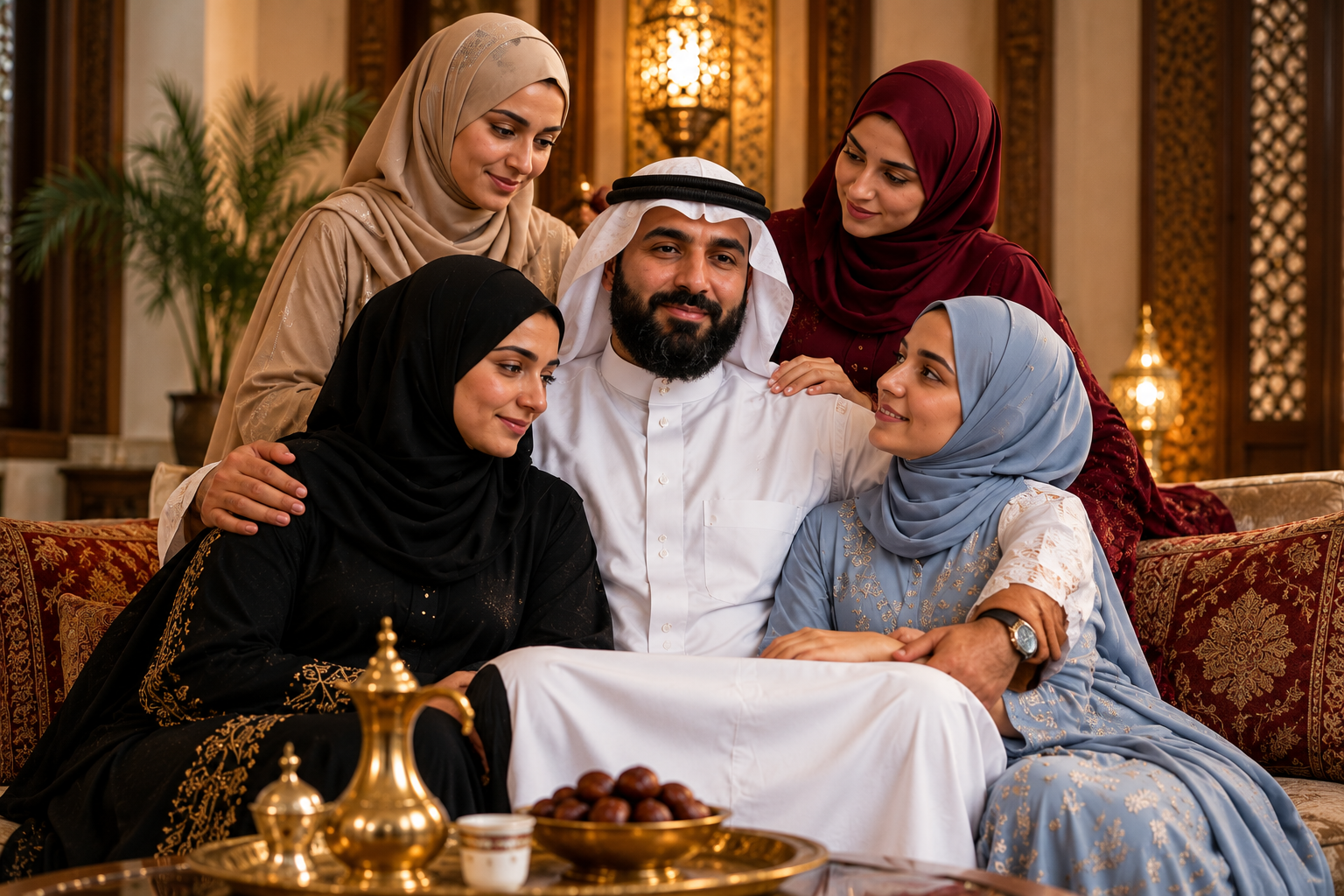
5. Polygamy: Why Can a Muslim Man Have Up to Four Wives, While a Woman Cannot Have Several Husbands?
One of the clearest examples of the difference in rights between men and women in traditional Islamic jurisprudence is polygamy. While a Muslim man may marry up to four women simultaneously, a Muslim woman cannot be married to several men at the same time.
This is not a minor distinction or simply a family custom. It is an inequality in the ability of men and women to organise their married lives under the law.
What does Islam establish?
Verse 4:3 of the Quran permits a man to marry two, three, or four women, provided that he can treat them justly. The same verse adds that if he fears he cannot do so, he should marry only one.
Traditional Islamic jurisprudence interprets this provision as authorising a man to have up to four wives simultaneously.
Women are not granted an equivalent right. A Muslim woman cannot maintain several simultaneous marriages to different men. Traditional Islamic jurisprudence considers such a union invalid.
The distinction is therefore explicit: a man may have several wives, but a woman may not have several husbands.
What is the reasoning behind this rule?
There are several traditional justifications.
1. Male financial responsibility. A husband is obliged to provide financial support for his wives and children. Polygamy is considered permissible provided that he can fulfil these responsibilities.
2. Family and social protection. Some historical explanations link the permission to societies in which war, mortality, and economic vulnerability could leave women and children in difficult circumstances.
3. Paternal lineage. The tradition places great importance on identifying the father and establishing family lineage. Historically, allowing a woman to have several husbands raised difficulties in determining paternity in the absence of reliable testing. This explanation helps us understand part of the historical context, but it is not a sufficient justification today for denying women general legal equality.
4. The traditional structure of family authority. Classical jurisprudence developed within a model in which men occupied a central position in the economic and family structure. Polygamy forms part of this system of rights and obligations differentiated by sex.
These explanations describe the historical and legal reasoning behind the rule. They do not demonstrate that men need greater matrimonial freedom than women or that women are incapable of assuming family responsibilities.
Is it still permitted today?
Yes. Polygamy remains legal, subject to different conditions, in various Muslim-majority countries. However, not all countries permit it: some prohibit it, while others impose judicial oversight, financial requirements, or conditions relating to the first wife.
For example, Morocco permits polygamy under the conditions established by its Family Code and subject to judicial oversight. In Tunisia, it is legally prohibited. Other countries have different rules and procedures.
What is the problem from the perspective of equality between men and women?
The fundamental question is why a matrimonial freedom is granted to one sex and denied to the other.
If the argument is that a man can financially support several wives, his financial capacity does not explain why an adult woman should be denied equivalent matrimonial freedom. If the concern is the welfare of children, this should be protected through rules that guarantee their rights, not through automatic inequality between parents.
The practical consequences must also be considered. A polygamous relationship can create differences in the distribution of time, financial resources, emotional attention, and legal security among the different wives. The traditional obligation to treat them justly does not, by itself, eliminate these problems.
This does not mean that all polygamous families have the same experiences or that all women living in such arrangements describe their circumstances in the same way. It means that the law grants men a matrimonial option that women do not have.
The clash with European values
In European legal systems, civil marriage is based on monogamy. A person cannot enter into a second valid civil marriage while the first remains in force.
But the underlying issue goes beyond European marriage legislation: it concerns equality of rights within a relationship.
If we defend the principle that men and women should enjoy the same personal autonomy, it is legitimate to ask why a religious tradition permits a husband to have several wives while prohibiting an equivalent option for a woman.
The central criticism is this: if polygamy is justified as a legitimate matrimonial choice for men, why are women not granted the same freedom?
The traditional answer rests on a hierarchical family model, with different roles and rights for each sex. From a contemporary perspective of legal equality, this model presents a difficult contradiction: it grants men greater matrimonial autonomy than women.
A tradition can explain why a rule emerged, but its age does not prove that it should remain unchanged indefinitely. Every legal system must ask whether it can justify this difference without treating women as people with less freedom to decide how to live their own lives.
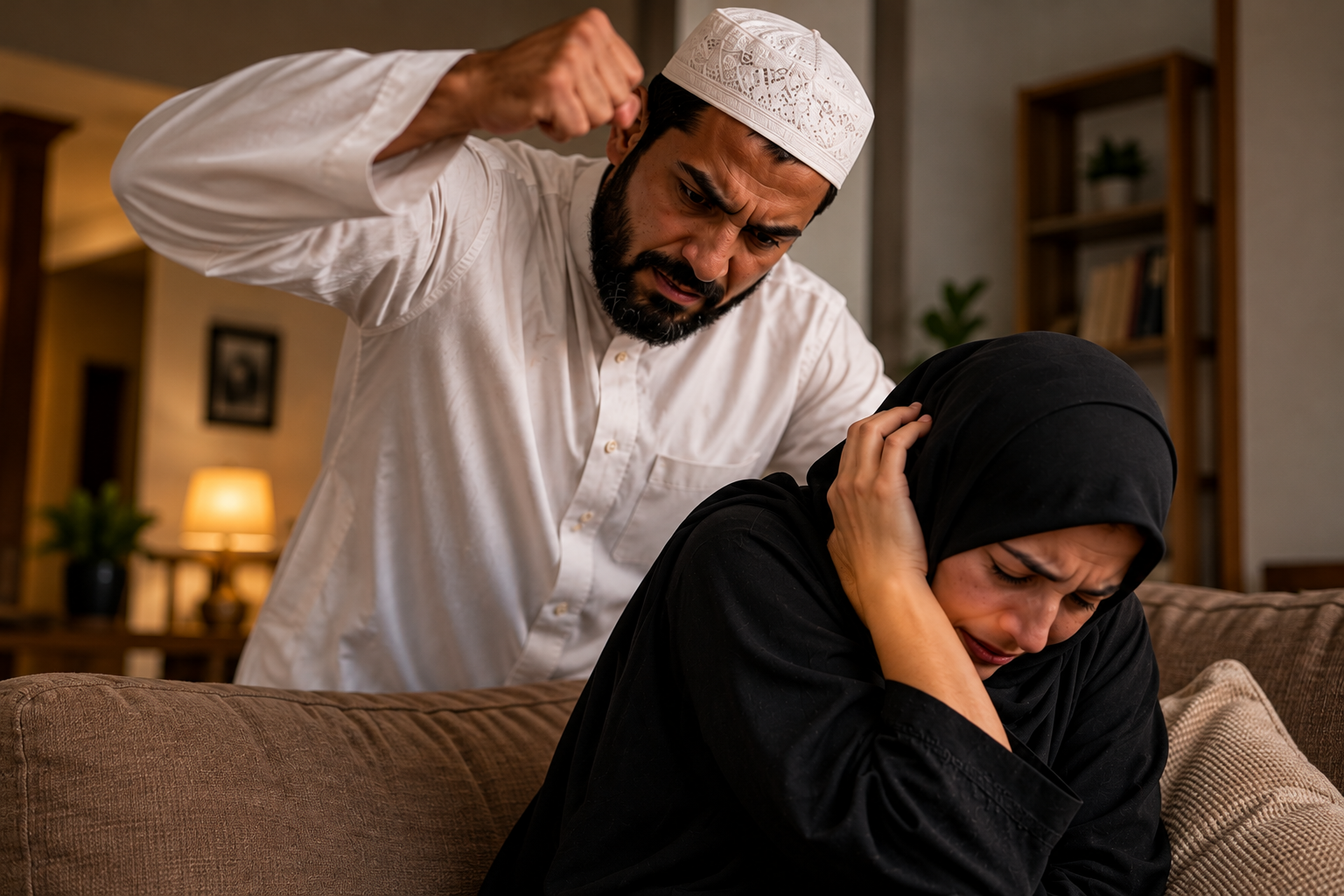
6. Violence Against Women: The Debate over Quran 4:34
What does the text say?
Verse 4:34 of the Quran is one of the most controversial passages in debates about the relationship between Islam and domestic violence.
The text uses the Arabic term daraba, whose translation and scope have been the subject of debate. Numerous traditional translations have interpreted it as authorising a husband to strike his wife under certain circumstances, as part of a sequence of measures relating to marital conflict.
Classical jurisprudence, across different schools, permitted certain forms of physical punishment subject to restrictions. Some jurists prohibited causing injuries, disfigurement, or blows to particular parts of the body.
What is the traditional reasoning?
The passage belongs to a marital structure in which the husband occupies a position of authority. It refers to a situation of nushuz, a term interpreted, depending on the legal context, as rebellion, a breach of marital duties, or conduct that threatens the marriage.
The best-known classical interpretation describes a sequence involving admonition, separation in the marital bed, and, under certain readings, physical punishment.
Is it still legal to strike a wife in Muslim countries?
There is no single answer for all countries. Some have passed specific laws against domestic violence, while others retain significant gaps in the protection of women.
The issue is not simply whether a religious text allows a particular interpretation. It is whether civil law effectively protects victims, allows them to report abuse, and guarantees an appropriate judicial response.
Criticism from the perspective of human rights
No cultural or religious difference should be used to justify assaults against women.
Domestic violence does not become acceptable because it is presented as discipline, correction, or the maintenance of authority within the family.
A society that recognises women as autonomous individuals must protect their physical and psychological integrity at home in exactly the same way as it protects them outside the home.
Every religious tradition should ask whether its interpretations help eliminate violence or leave room for a man to attempt to justify it through his marital authority.
A husband’s authority must never take precedence over his wife’s right to live free from violence.
Conclusion: Can Traditional Islam Adapt to Equality Between Men and Women?
Our examination of traditional Islamic legal rules leads to a fundamental question: to what extent can a society defend equality between men and women when certain religious interpretations establish different rights and obligations for each sex?
Inheritance, testimony, freedom to choose a partner, polygamy, divorce, marital guardianship, authority over children, and the transmission of family identity are not isolated issues. Taken together, they reveal a traditional legal model in which men occupy a privileged position in several areas.
A man may receive a larger inheritance share than his sister; he may marry a Christian or Jewish woman while a Muslim woman is denied the same option; he may have several wives; and he may enjoy greater freedom to divorce or retain family powers that are not recognised in the same way for the mother.
Added to this are religious interpretations that have permitted forms of physical punishment against wives, traditional rules that assign men a position of authority within the family, and systems of lineage that give particular importance to the paternal line.
Not all these rules apply in every Muslim country. Some have been reformed, others remain in force, and others are the subject of debate.
However, recognising this diversity should not be used to avoid an uncomfortable question: are these legal inequalities compatible with the principle that men and women should enjoy the same rights?
Tradition Cannot Be a Sufficient Answer
A rule may have served a particular purpose in a historical society and still become difficult to defend as social conditions change. The age of a rule explains its history, but does not, in itself, prove that it is just.
The Problem of Treating a Religious Interpretation as Unchangeable
One of the greatest difficulties arises when certain interpretations of religious rules are considered immutable because they are understood as divine commands.
If a rule is presented as a human decision, it can be debated, amended, or repealed through legal procedures. But when questioning it is portrayed as questioning the will of God, the debate can take on a religious dimension that makes reform more difficult.
The Question Traditional Islam Must Address
Ultimately, this debate is not about setting all Muslims against all Europeans. It is about critically examining specific rules and asking whether they can coexist with a conception of citizenship based on equality before the law.
Women’s equality cannot depend on whether a religious interpretation considers it appropriate to recognise it. It must be a right guaranteed by law.
Genuine coexistence between Europe and Muslim communities does not require religion to disappear. It requires religious differences to coexist within a shared framework of fundamental rights, in which no woman has less freedom, less protection, or less legal autonomy simply because she is a woman.
The challenge for traditional Islam is to demonstrate that it can reconsider interpretations that conflict with this principle. Europe’s challenge is to defend equality consistently, without discriminating against Muslims or turning criticism of religion into hostility towards people.