
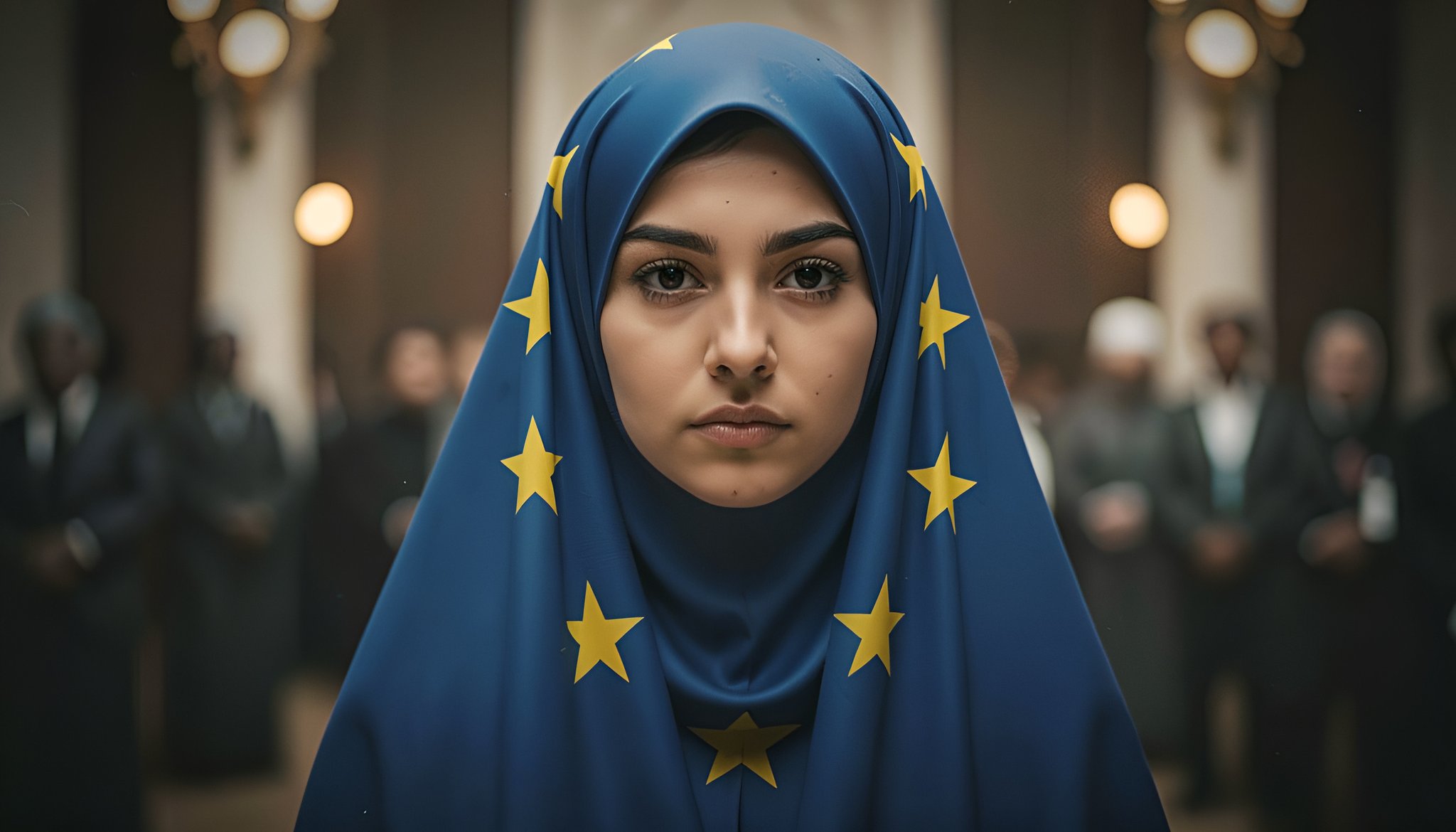
Europe Is Changing Gradually: To What Extent Is Islam Influencing Society, and What Will Europe Look Like in 50 Years?
An analysis of cultural change, new customs and the future of European societies
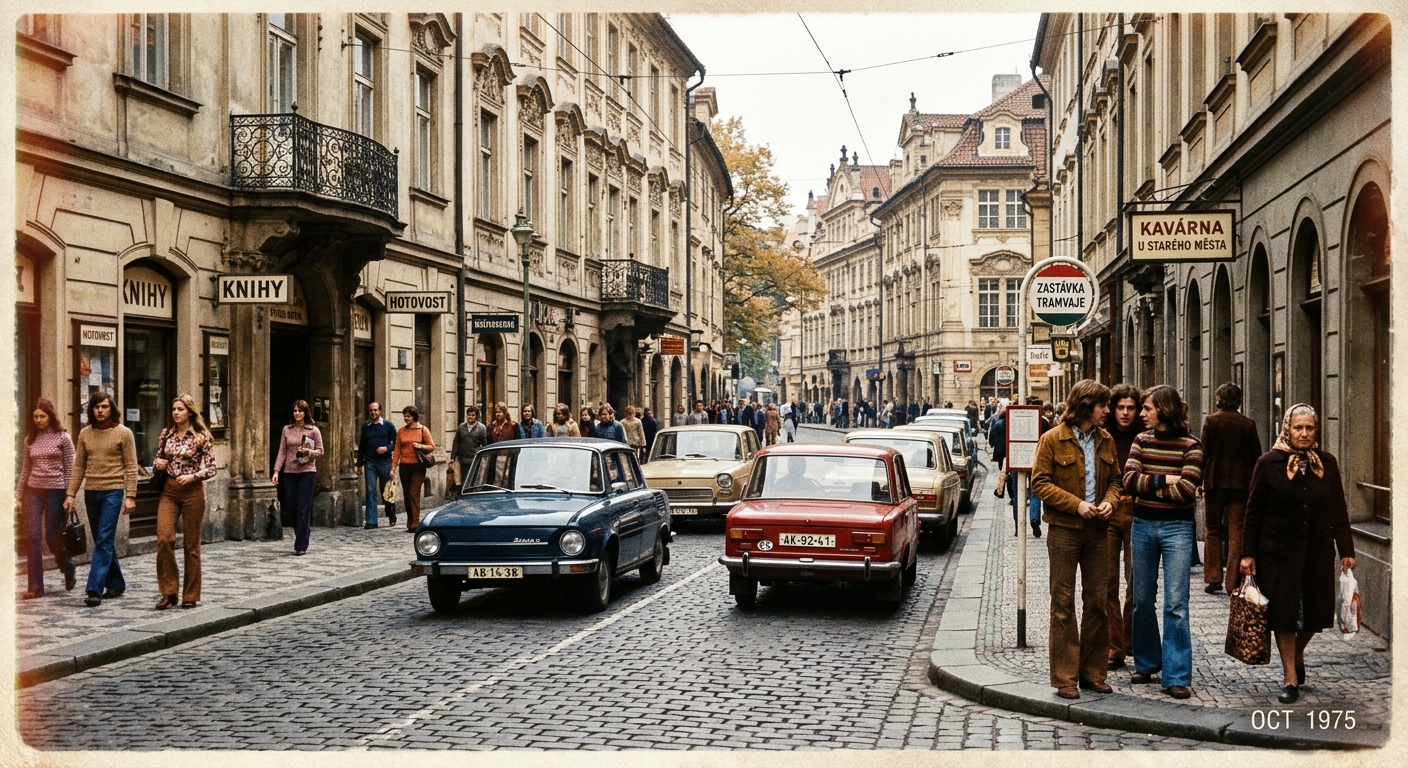
Imagine that someone who lived in Europe in 1975 could return today to the streets of Barcelona, Paris, London, Brussels or Berlin.
They would find cars, supermarkets, schools, bars, offices and homes that they could easily recognise. But they would also discover something that would probably catch their attention: the much more visible presence of Islam in everyday life.
They would see women wearing hijabs in the streets, mosques in residential neighbourhoods, halal butcher shops, restaurants advertising food prepared according to Islamic rules, Ramadan celebrations, and new generations of Europeans talking about their Muslim identity as naturally as others talk about their family traditions.
Some of these changes would surprise them. Others would seem completely normal.
And here an important question arises: how did Europe reach this point? What role has Islam played in this transformation? Are we witnessing cultural diversity becoming part of existing societies, or a process that is also changing their customs, values and social norms?
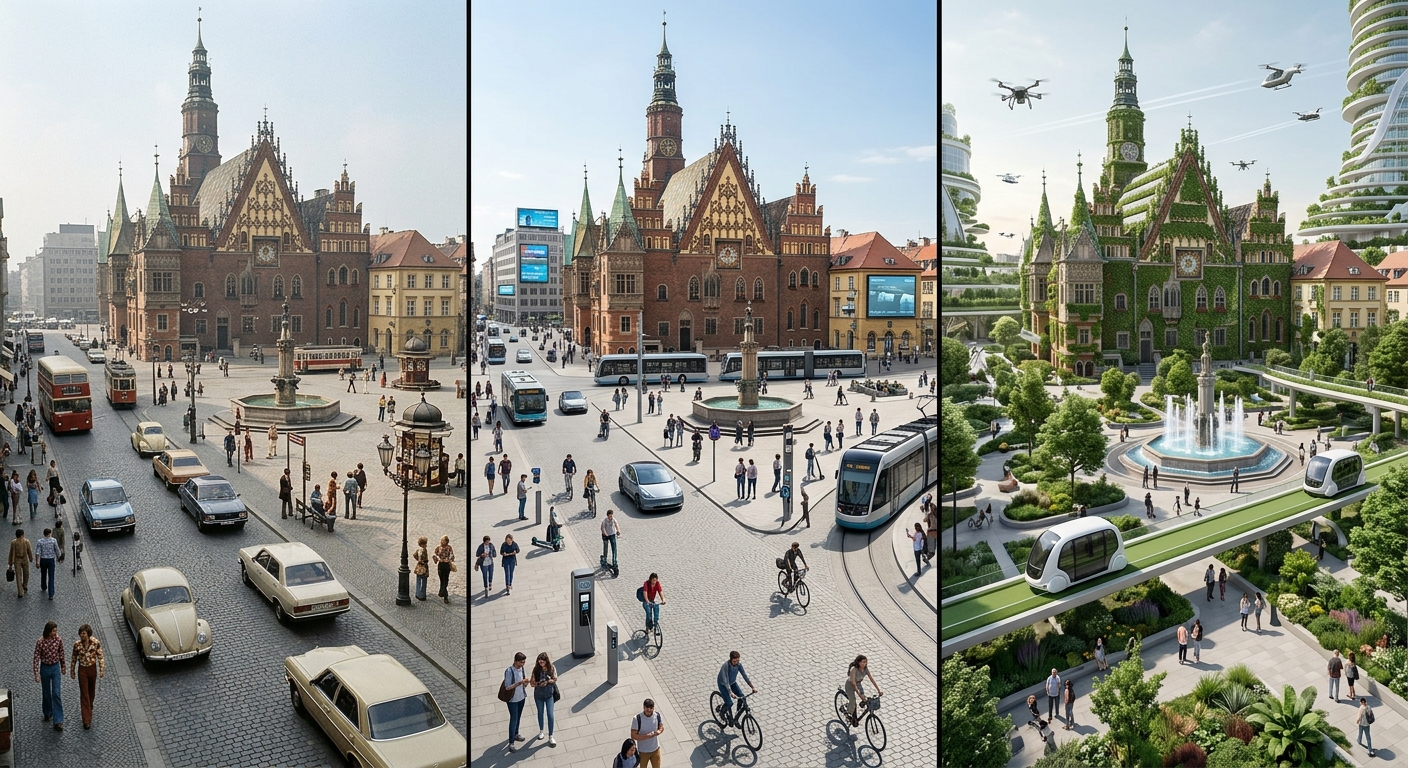
The question becomes even more interesting when we broaden our perspective. If we compare Europe in 1975 with Europe in 2026, we can observe changes that have taken place gradually, almost without many people realising their full significance.
If these changes have occurred over half a century, what transformations might we witness over the next 50 years?
To answer this question, we need to look back, analyse the present and distinguish between what we know, what we can interpret and what we cannot yet predict.
1. Europe 50 Years Ago: A Culturally Different World
In the 1970s, Europe was already a diverse society. Long-established Muslim communities existed in the Balkans and other regions, alongside communities originating from former colonial territories. Muslims were also living in European cities before post-war labour migration began.
It would therefore be incorrect to claim that Islam arrived in Europe only a few decades ago.
What changed significantly during the second half of the twentieth century was the presence of Muslim communities in many Western European cities. This was largely the result of labour migration, post-colonial ties, family reunification and, later, refugee movements.
Countries such as France, Belgium, Germany, the Netherlands and the United Kingdom received significant numbers of people from Muslim-majority countries. Spain also underwent a substantial transformation, particularly from the final decades of the twentieth century onwards.
In 1975, many people in Western Europe could go through much of their lives without regularly encountering a woman wearing a hijab or having a shop specialising in halal products nearby. These realities already existed in certain neighbourhoods and cities, but they were much less visible in other places.
Today, for millions of Europeans, they are part of everyday life.
But we must understand something fundamental: the transformation is not simply about there being more Muslims. It is also about some of their cultural and religious practices becoming part of public life, commerce and social relations.
This does not mean that all European societies have changed in the same direction or to the same extent.
It means that a reality that once had a limited presence in many places is now more visible and, in certain circumstances, has a greater capacity to influence its surroundings.
2. The First Major Change: The Presence of Islam in Public Spaces
One of the easiest changes to observe is the public visibility of Islamic religious symbols and practices.
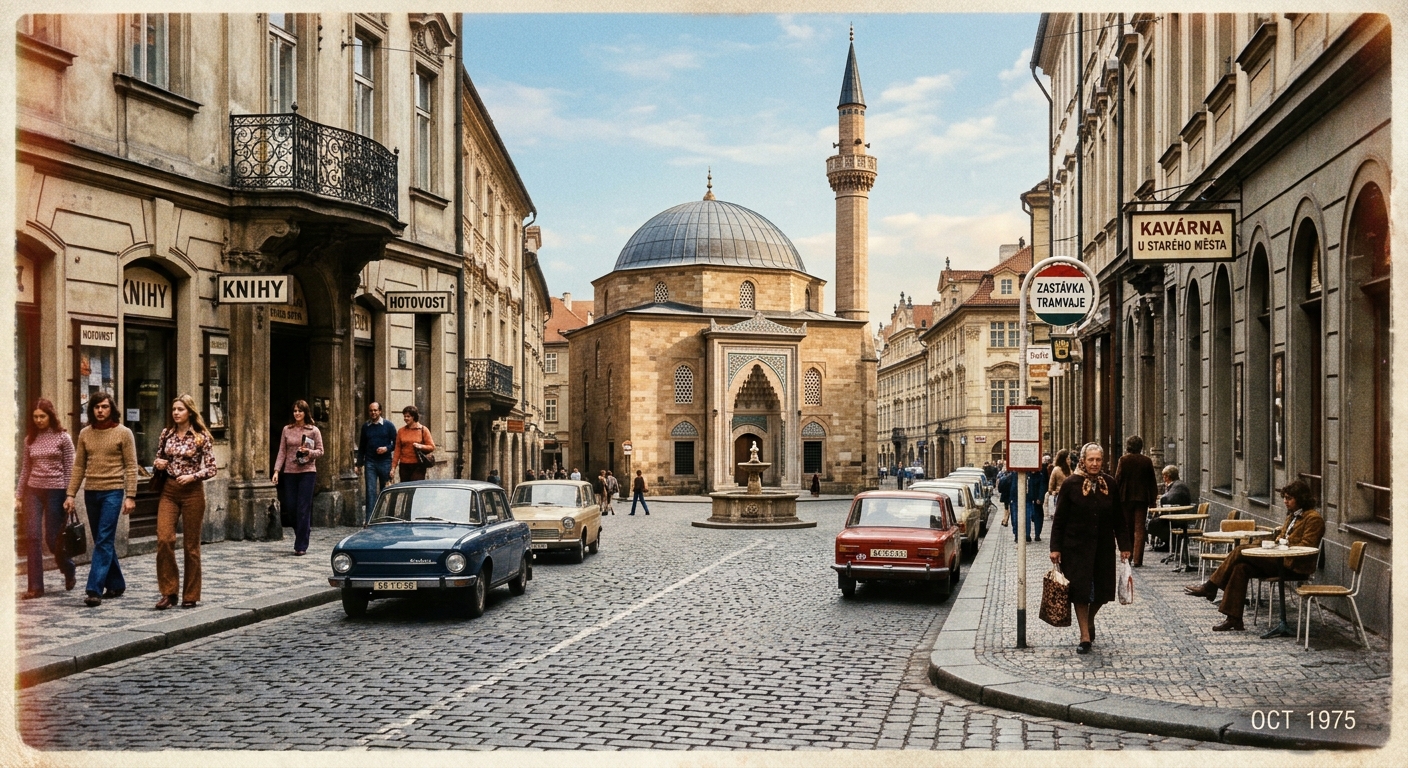
Fifty years ago, Islam had a much lower everyday profile in many Western European cities than it does today. We can now find mosques, prayer rooms, Islamic cultural centres, religious associations and businesses serving the needs of Muslim communities.
We also see women wearing hijabs, men wearing religious clothing, and families publicly participating in celebrations associated with the Islamic calendar.
These elements do not all have the same meaning. A mosque is a place of worship; a halal shop is a commercial establishment; and the hijab is a garment that may express religious beliefs, cultural identity or a personal choice. Nevertheless, taken together, they demonstrate a transformation in the public visibility of religion.
This change raises an important question for European societies: how should a religion that had a limited presence in many neighbourhoods for decades coexist with societies that had, in some respects, been moving towards a less prominent role for religion in public life?
Europe has no single answer. France, for example, follows a model of secularism that differs from those found in other European countries. The United Kingdom, Germany and Spain have their own legal traditions and different relationships between the state and religion.
The fundamental question is not whether a religion should be visible.
The question is how to ensure that religious freedom coexists with freedom of conscience, equality between men and women, and the neutrality of public institutions.
3. The Hijab: A Garment That Has Also Become a Social Debate
Few issues illustrate the encounter between Islam and European societies as clearly as the hijab.
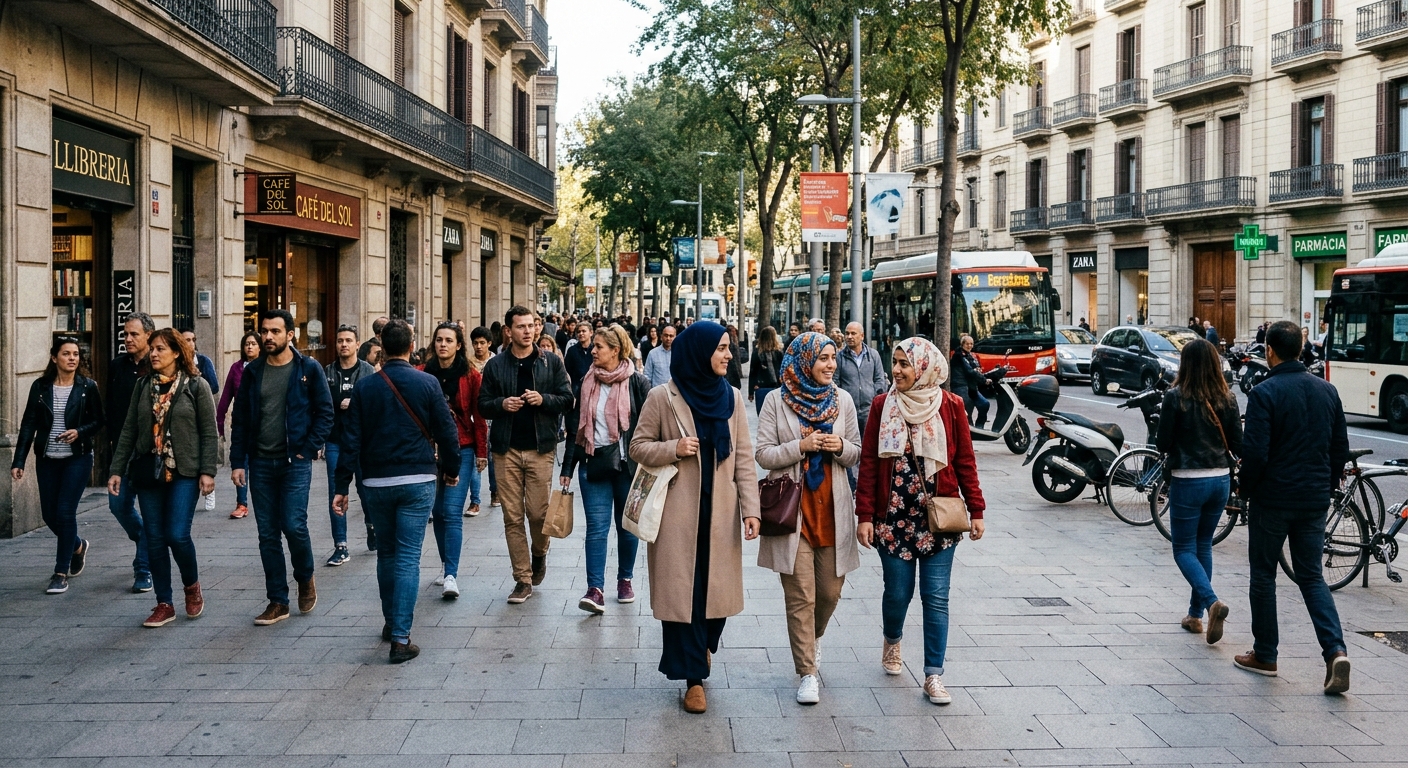
Half a century ago, it was much less common in many Western European cities. Today, millions of people see it in the streets, on public transport, at universities, in shops and, in some cases, in certain workplaces.
The transformation is visible, but its interpretation is more complex.
The hijab has also acquired a political significance that goes beyond the garment itself. For some, it represents religious freedom and the right to cultural diversity. For others, it raises questions about gender equality, religious norms and integration.
The cultural change is clear: a garment that was uncommon in many places has become a familiar feature of everyday life and the subject of an ongoing public debate.
This is one way in which demographic change can also lead to cultural and political transformation.
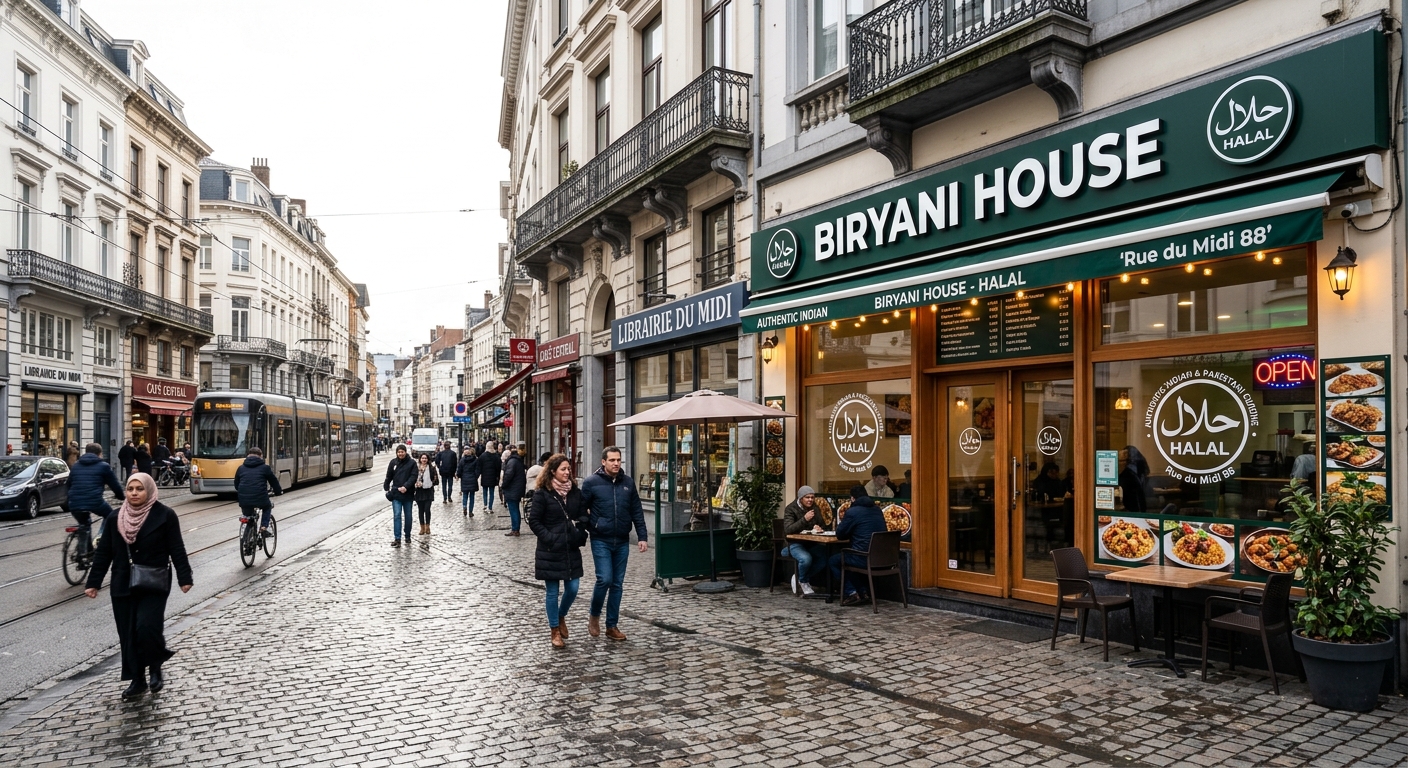
4. Food: When a Religious Practice Transforms the Market
Cultural changes do not always begin in parliament or in ideological debates. They often start with something as ordinary as buying food.
Over recent decades, the availability of halal products has expanded in many European cities. Specialist butcher shops, restaurants, distributors, supermarkets and companies offering products for Muslim consumers have emerged.
The term halal generally means what is permitted under Islamic rules. In the context of food, it refers particularly to products and preparation methods that comply with those rules.
For someone living in certain European neighbourhoods in 1975, the presence of numerous halal establishments might have been a novelty. For many residents today, however, buying from a halal butcher or eating at a restaurant offering halal food is perfectly normal.
Why does this happen?
The answer is relatively straightforward: when a community grows and maintains particular religious practices, demand emerges for products and services that businesses have an incentive to provide.
This mechanism is common in market economies. Immigration from other parts of the world has also contributed to the expansion of restaurants, shops and products that were previously less common.
The halal market has one particular characteristic: some consumers’ needs are connected to religious rules about what they can eat and how certain foods should be prepared.
The result is a change that is both commercial and cultural.
The interesting question is not simply how many halal shops exist, but how the relationship between the religious preferences of part of the population and the commercial offer available to everyone is changing.
5. Ramadan: A Religious Celebration That Is Becoming More Visible
Another example is Ramadan, the month of fasting in the Islamic calendar.
During this period, Muslims who observe the fast abstain from eating and drinking from dawn until sunset, subject to the relevant religious exemptions.
Fifty years ago, Ramadan had a much more limited public presence in many parts of Western Europe. Today, it may appear in the news, on social media, in commercial campaigns and in activities organised by associations, municipalities or community organisations.
Some restaurants adjust their opening hours. Certain employers take account of the needs of employees who are fasting. Schools may need to address questions concerning students’ well-being, physical activity or the organisation of particular activities.
In some cities, public events are also held to mark the end of Ramadan, known as Eid al-Fitr.
All this demonstrates how a religious practice can move beyond the family and community sphere and become a recognisable feature of public life.
To what extent should schedules or activities be adjusted to facilitate coexistence? Which adjustments are reasonable? When does a voluntary accommodation become pressure on those who do not wish to participate?
These are legitimate questions that must be addressed in light of the circumstances, the law and everyone’s rights.
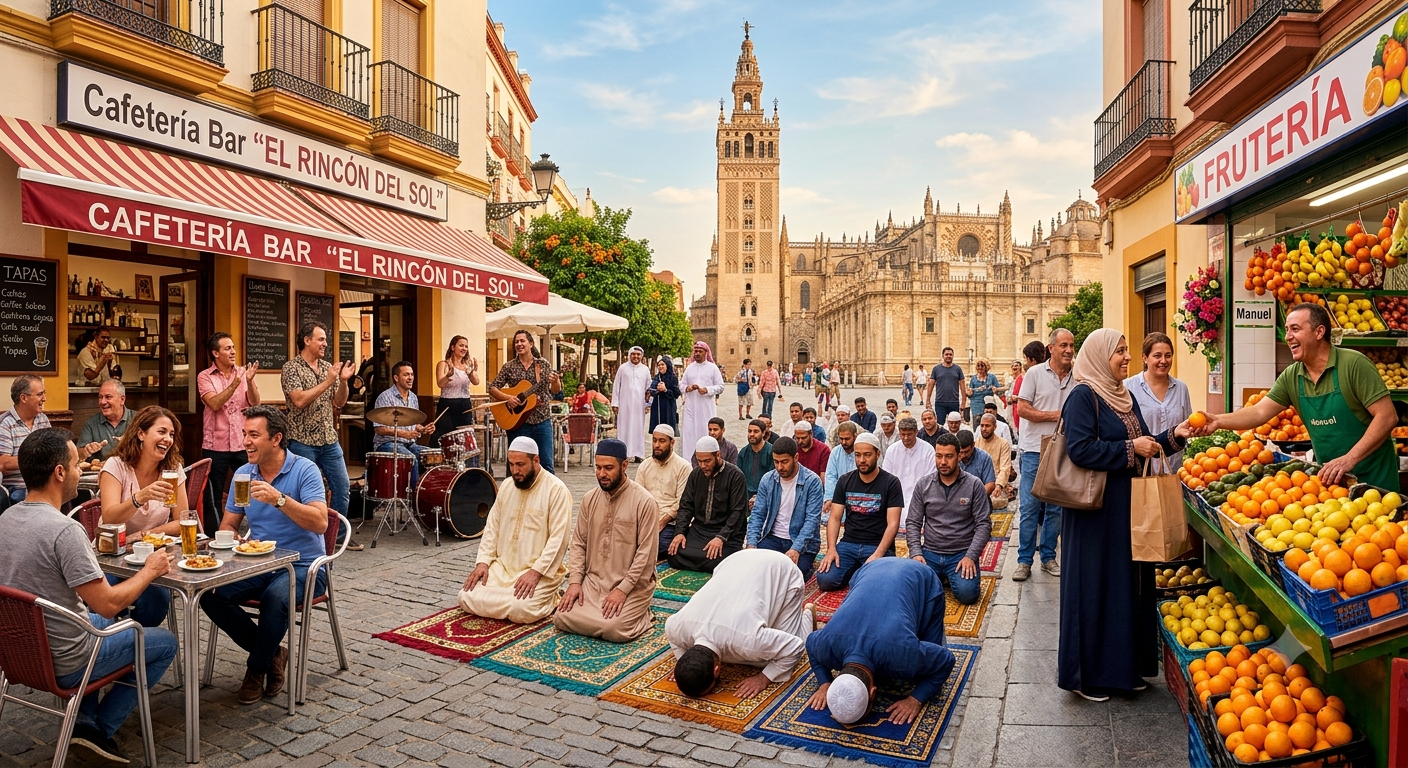
6. Mosques and Neighbourhoods: The Transformation of the Urban Landscape
Mosques are another visible sign of the consolidation of Muslim communities in Europe.
In many places, religious activities were initially organised in modest premises, garages or rented spaces. Over time, some communities have been able to acquire buildings, open cultural centres or construct larger mosques.
In certain respects, this process resembles the experience of other immigrant religious communities throughout European history.
The difference is that the growth of Muslim communities has coincided with contemporary debates about immigration, national identity, security, secularisation and social cohesion.
As a result, the construction of a mosque can become a local political issue.
For its supporters, it guarantees religious freedom and provides an appropriate place of worship. Some residents may be concerned about traffic, noise, the use of urban space or the activities that will take place in the building. In other cases, objections are rooted in opposition to the very presence of Islam.
The key point is that the urban landscape reflects changes in society.
When a community moves from being small and dispersed to having an established presence, its material and religious needs also change.
And the landscape of cities changes with them.
7. Relations Between Men and Women: Where Deeper Conflicts May Emerge
Not all cultural changes have the same significance.
Opening a halal shop mainly changes the commercial offer. Building a mosque changes the urban landscape. But changes in ideas about family, sexuality, religious authority and equality between men and women can affect much deeper aspects of society.
In this area, it is important to distinguish between Islam as a religion, the different interpretations of its texts, and the social customs of the countries from which some communities originate.
Not every traditional behaviour is a religious obligation. Nor do all Muslims interpret rules concerning marriage, children’s education, clothing or relationships between men and women in the same way.
Europe is home to liberal, conservative, practising and less practising Muslims, as well as non-believers from Muslim family backgrounds. There are also significant differences between generations and countries.
Nevertheless, tensions can arise in certain conservative Islamic religious environments with values that are strongly protected in European societies today.
For example:
- The principle that men and women should have equal rights and opportunities.
- The freedom to choose a partner, marry or divorce.
- A woman’s right to decide how she dresses.
- The freedom to leave a religion or change one’s beliefs.
- Sex and relationship education.
- The rights of homosexual people.
- Parental authority in relation to the increasing autonomy of children.
The relevant question is what happens when certain traditional norms encounter a society that legally recognises individual autonomy and equality before the law.
In some cases, people adapt their beliefs to the social norms of their surroundings. In others, they maintain their convictions within their private lives. Family conflicts, community pressure or attempts to restrict the freedom of certain members of the community may also arise.
A society can accept considerable religious diversity without giving up the requirement that everyone respect the same fundamental rights.
8. Schools: Where Much of the Future Will Be Decided
If we want to understand how Europe might change over the next 50 years, we must pay particular attention to schools.
New generations do not simply acquire knowledge. They also learn how to interact with different people, understand shared rules and develop their identities.
European classrooms may include pupils from Muslim, Christian, Jewish and other religious families, as well as pupils with no religious affiliation. Some practise their beliefs intensively; others have little connection with religion.
This diversity raises practical questions.
How should physical education classes be organised when families object to certain activities? How should religious celebrations be addressed? What should happen when a family rejects particular educational content? How can schools ensure that every student receives an education that respects their rights and enables them to develop their autonomy?
There is no single answer for every case. National laws and education systems establish different frameworks.
However, one principle is essential: public education must be compatible with fundamental rights and cannot allow a pupil to be deprived of knowledge or opportunities because of their sex or because of religious demands that conflict with the law.
At the same time, Muslim pupils have the right to receive an education without discrimination and without having their background or religion treated as a permanent cause for suspicion.
The outcome will depend, in part, on how families, teachers, institutions and younger generations interact.
We can imagine several scenarios.
In one, younger generations combine their family heritage with a shared European identity. In another, communities become more isolated from one another. A mixture of both outcomes is also possible, depending on the neighbourhood, socioeconomic circumstances, education and personal experiences.
What we cannot do is assume that all children from Muslim families will necessarily reproduce their parents’ beliefs.
History shows that generations can preserve some traditions, abandon others and create new forms of identity.
9. Commerce, Fashion and Services: When Diversity Becomes a Market
Cultural transformations can also be seen in the economy.
The presence of Muslim consumers has encouraged markets in different places for halal food, modest fashion, financial products compatible with certain interpretations of Islamic law, tourism aimed at Muslim customers and other specialised services.
These sectors do not all have the same level of development, nor do they all grow at the same pace.
However, they illustrate a potentially decisive mechanism: when a community reaches a sufficient size, businesses begin adapting their offerings to serve it.
A clothing brand may sell garments designed for women who wish to cover their hair. A travel agency may offer services for families seeking particular dietary arrangements or prayer facilities. A bank may develop financial products for customers who avoid interest for religious reasons.
Some of these businesses serve exclusively Muslim consumers. Others seek a wider market.
This process has consequences beyond religion. It can create jobs, increase competition, diversify commercial offerings and open up business opportunities.
It can also generate debates about certification, transparency, regulation and the conditions under which certain products are marketed.
However, we should avoid jumping to conclusions: the existence of businesses connected with Islam does not prove that society as a whole is adopting Islamic religious values.
Markets respond to demand. That demand may come from deeply religious people or from consumers who simply want a particular product.
The question for the future is whether these sectors will remain specialised markets or whether some of their practices will become more widely incorporated into the European economy.
That will depend on consumer habits, business decisions and demographic developments.
10. Is Europe Changing, or Is Its Population Simply Changing?
This is probably the most important question in the entire article.
A society can change because it incorporates people with different customs. But it can also change because its own citizens adopt those customs, because institutions modify their rules or because businesses adapt their products.
These are different processes.
Imagine a city where the Muslim population increases and ten new halal restaurants open.
This change demonstrates that the commercial offer for part of the population has expanded. But it does not, by itself, prove that non-Muslim residents have changed their habits.
Now imagine that these restaurants become regular destinations for people from many different backgrounds, that younger generations consume halal products without considering them unusual, and that some businesses incorporate these products into their general offering.
In that second scenario, we could speak of broader cultural diffusion, although its extent and causes would still need to be studied.
The same applies to Ramadan, clothing, religious celebrations and other practices.
We can distinguish three levels of transformation:
First level: Presence. A custom appears because there are people who practise it.
Second level: Adaptation. Businesses, schools, public authorities or neighbours make adjustments to accommodate the practice.
Third level: Cultural incorporation. The practice spreads beyond the community of origin and becomes part of the everyday habits of a broader section of society.
Not every custom progresses through all three levels. Some remain limited to a community for generations. Others spread widely. Some even disappear.
This distinction allows us to analyse the phenomenon without exaggerating it or denying changes that are genuinely taking place.
The question is not simply how many Muslims live in Europe, but which practices they maintain, which they change, which spread and how host societies respond.
11. The Theory of Gradual Change: Why We Do Not Notice Transformation as It Happens
Why does change seem invisible in everyday life?
Sociologists sometimes discuss this in terms of incremental or cumulative social change.
If a society changes by 1% each year, nobody notices the difference between Tuesday and Wednesday. Accommodations, adjustments and changes to rules take place locally or in separate areas: a municipal swimming pool changes its schedule to accommodate different groups; a school modifies its menu; a company adjusts its break schedules.
However, when small adjustments accumulate over 50 years, their combined effect can be substantial. The result is not necessarily simple coexistence, but a possible redefinition of what society considers “normal” or “acceptable”.
There is another reason why many social transformations can seem insignificant when observed from day to day.
Human beings become accustomed to their surroundings. We adapt to new developments and stop paying attention to them once they become part of our routine.
A new shop opens in the neighbourhood. Then another opens. A new restaurant appears. A school welcomes pupils from different backgrounds. A religious celebration begins receiving media attention.
Each change, considered individually, may seem unimportant.
But after twenty or thirty years, the overall picture can be very different.
This means that cumulative changes are often easier to recognise when we compare two distant historical periods than when we observe the transition between them.
Consider technology. In 1975, few people could have imagined how telephones, shopping, personal relationships or access to information would change with the spread of the internet and smartphones.
None of these changes happened in a single day. Each innovation was gradually incorporated into everyday life until it altered habits that had once seemed permanent.
Culture can work in a similar way, although the mechanisms are different.
Customs are transmitted through families, friendships, schools, the media, businesses and institutions. They can also change through conflict, negotiation, education or the voluntary adoption of new practices.
That is why comparing 1975 with 2026 is useful, but photographs from two different periods are not enough. To establish what has changed and why, we need data, testimonies, historical studies and comparisons between cities and generations.
Looking back helps us recognise the scale of change. Research helps us discover what has caused it.
12. What Do the Data Say About the Muslim Population’s Evolution?
To understand the future, it is useful to examine the available demographic projections.
2000
Approximately 37 million
Twenty-five years ago · around 5%
2026
Approximately 46–50 million
Estimated current population · approximately 6–7%
These figures are approximate and depend on the geographical definition of Europe and the methodology used. The Pew Research Center estimated that there were around 46 million Muslims in Europe in 2020, representing approximately 6% of the population.
How many Muslims could there be in 2050?
There is no recent, reliable projection that provides an exact figure for all of Europe in 2050. As a reference, we can use the scenarios published by Pew in 2017, which extended to 2050 and covered the European Union as it existed at the time, together with Norway and Switzerland, rather than the whole of Europe.
| Scenario for 2050 | Muslim population | Estimated share |
|---|---|---|
| No further Muslim immigration | 35.8 million | 7.4% |
| Continued regular immigration | 57.9 million | 11.2% |
| High and sustained immigration | 75.6 million | 14% |
Source: Pew Research Center, Europe’s Growing Muslim Population (2017).
These scenarios were developed using data from 2016 and should not be presented as current predictions. They should also not be directly combined with estimates covering all of Europe.
13. The Challenge of Integration: Adaptation, Coexistence or Mutual Transformation?
The word integration is frequently used, but it does not always mean the same thing.
For some people, integration means learning the language, working, obeying the law and participating in society. For others, it also involves adopting certain cultural habits of the majority population.
These two ideas are not identical.
A person can speak Spanish fluently, work, pay taxes and respect the law while maintaining their religion, clothing or family customs.
That is why it is important to distinguish between civic integration, economic participation and cultural assimilation.
The issue becomes more complex when certain practices conflict with fundamental rights or shared rules.
What happens if a family tries to prevent a daughter from participating in a compulsory educational activity for religious reasons? What should happen if someone attempts to impose unlawful restrictions on another person’s freedom? How should institutions respond when a religious organisation promotes ideas that conflict with legal equality?
In such cases, the response should not depend on whether the practice is Muslim, Christian or associated with another tradition. It should depend on the rights affected and the applicable law.
At the same time, we should not confuse maintaining a cultural identity with rejecting the society in which someone lives.
A person can be Muslim and feel fully European. They can maintain certain family traditions while rejecting others. They can hold conservative religious views while respecting the freedom of people who think differently.
The opposite can also occur: someone born in Europe can reject democratic values or support authoritarian ideas, regardless of their religion.
The challenge is to build a shared framework in which diversity is compatible with individual rights.
The fundamental principles of that framework should not be negotiable, but this does not mean everyone must live in the same way.
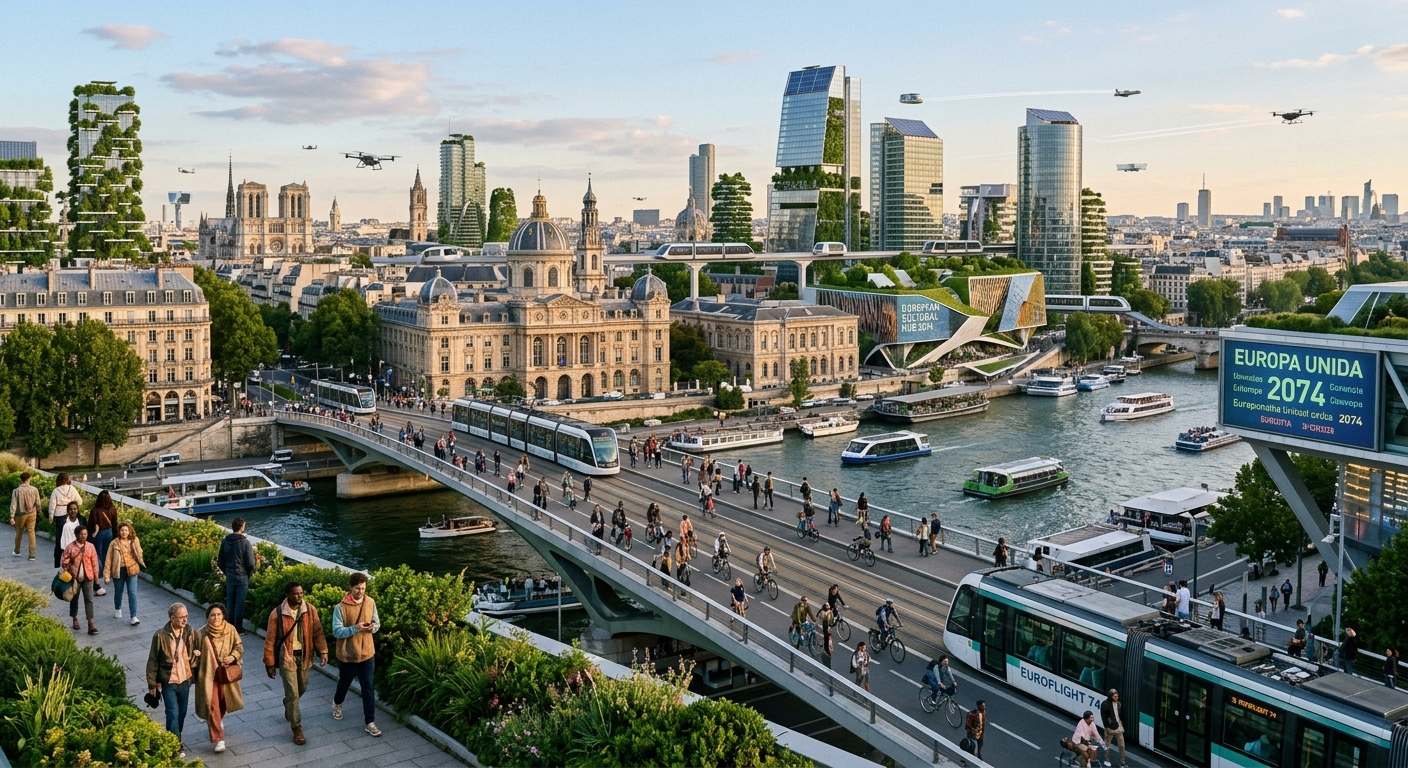
14. Europe in 50 Years: Three Possible Scenarios
At this point, we can ask the most difficult question: what will Europe look like in 2075?
We cannot know for certain. Fifty years is long enough for demographic, economic, political and cultural conditions to change substantially.
However, we can construct scenarios that help us identify the decisive factors.
Scenario 1. A Plural Society with Shared Rules
In this scenario, Muslim communities remain part of European society, and younger generations develop identities that combine different cultural influences.
Halal practices, mosques and Islamic celebrations continue to be present, but their significance varies by country, city and individual preference.
Some customs spread to the wider population; others remain associated with people who practise them for religious reasons.
Institutions maintain equality before the law, freedom of conscience and fundamental rights as common principles.
Cultural diversity does not disappear, but neither does it prevent the development of a shared civic identity.
Scenario 2. A Society with More Separate Communities
In this scenario, cultural differences combine with economic inequalities, residential segregation and integration difficulties.
Some neighbourhoods develop social, commercial and religious networks closely associated with a particular community. Relations between groups may be limited, and disagreements over certain social norms become harder to resolve.
Under these conditions, tensions concerning education, gender equality, national identity and religious freedom may increase.
It would not be correct to attribute this outcome automatically to Islam. Segregation and conflict can have economic, political, urban-planning and social causes.
However, it would be important to investigate the roles played by religious organisations, the attitudes of different groups and public policies in each case.
Scenario 3. Broader Cultural Transformation
In this scenario, some practices associated with Islam cease to be exclusive to Muslim communities and become incorporated into wider sections of society.
The availability of halal products may expand, certain celebrations may become more prominent in public life, and some forms of dress or ways of organising everyday life may become more widely accepted.
Debates about the role of religion in public institutions, the limits of religious freedom and the relationship between family traditions and individual rights may also grow.
However, this scenario does not necessarily mean that Europe will adopt Islamic religious beliefs. A society can incorporate certain commercial or cultural practices while remaining predominantly secular.
Muslim communities themselves may also undergo significant changes. Younger generations may abandon certain practices, reinterpret their beliefs or adopt more liberal positions.
These three scenarios are analytical possibilities, not predictions. They may also coexist in different parts of Europe.
The actual outcome will depend on demographics, education, employment, social mobility, integration policies, changing beliefs and individual decisions.
15. The Big Unknown: What Will Happen to Younger Generations?
If we want to understand Europe in 2075, we must look at today’s young people.
Children born into European Muslim families will grow up in societies where multiple cultural influences coexist. Some will maintain a strong religious identity. Others will be less observant. Some will distance themselves from their parents’ religion, while others may strengthen their beliefs.
There will also be differences between those who grow up in socially integrated neighbourhoods and those who grow up in environments marked by segregation, economic hardship or identity conflicts.
Education, friendships, employment opportunities, personal relationships and contact with other groups may influence these trajectories.
Demographics matter, but they do not determine people’s beliefs on their own.
16. What Europe Should Monitor in the Coming Years
If we want to understand the real depth of these changes, counting mosques, halal shops or people wearing hijabs is not enough.
We need to monitor indicators that help distinguish cultural presence from social transformation.
Among the most important are:
Demographics: How the Muslim population evolves and how it is distributed geographically.
Religious practices: How many people observe particular customs and how those practices change between generations.
Education: How conflicts between family preferences, educational content and children’s rights are resolved.
Gender equality: Attitudes towards women’s autonomy, the choice of partner and individual freedom.
The economy: How halal markets and other specialised services evolve, and what proportion of their products and services reach non-Muslim consumers.
Public spaces: How places of worship, celebrations and institutional policies change.
Social cohesion: How different groups relate to one another, what conflicts emerge and how they are resolved.
Fundamental rights: Whether institutions guarantee the same freedoms and obligations to all citizens.
These indicators would help establish whether we are witnessing cultural diversification, a transformation of majority practices or a combination of both.
They would also help identify when a change is local and when it has a broader impact.
17. The Question Europe Should Not Avoid
Europe has the right to debate how it wants to organise its future. It can analyse the effects of immigration, study the influence of religions and discuss which policies it considers appropriate for maintaining social cohesion.
However, the debate should avoid two opposing mistakes.
The first is to claim that the presence of Islam cannot transform European societies. History shows that migration, religion and customs can influence collective habits.
The second is to portray every change associated with Islam as an inevitable threat. This confuses cultural diversity with conflict and attributes the same intentions to people whose beliefs, behaviour and life plans may be very different.
Critical analysis requires recognising that religious practices can have real social consequences and that those consequences must be examined without prejudice.
If an organisation promotes equality, coexistence and respect for rights, its actions should be assessed accordingly. If an organisation advocates religious coercion, discrimination or restrictions on freedoms, that should also be examined, and accountability should follow where appropriate.
The same standards should apply to all organisations, regardless of their religion or ideology.
Religious freedom does not require us to abandon criticism. Criticism of a religion does not justify discrimination against those who practise it.
The European challenge is to uphold both principles at the same time.
Conclusion: In 50 Years, Today’s Changes Will Be Part of History
If we compare Europe in 1975 with Europe in 2026, we can observe profound transformations in population composition, the visibility of religions, commerce, customs and everyday life.
In many cities, Islam now has a public presence that was much less common half a century ago. Mosques, halal products, Ramadan and the hijab are part of everyday life for millions of people.
These changes deserve to be studied, but they do not all mean the same thing. Some reflect the arrival and settlement of new communities. Others show how businesses and institutions adapt. Still others may represent broader cultural diffusion.
The fundamental question is to discover which of these transformations remain within the communities that practise them and which ultimately change the habits of society as a whole.
We do not know what Europe will look like in 2075. The Muslim population may continue to grow in certain regions, but secularisation, migration patterns, political decisions and the evolution of Muslim communities themselves could significantly alter the outcome.
What we can say is that societies do not remain static. They change through the decisions of millions of people, institutions and historical circumstances.
Sometimes changes seem insignificant when viewed up close. Only when we look back do we understand how profoundly they have transformed our surroundings.
That is why the question we should ask is not simply whether Islam is changing Europe.
The question is broader:
Which aspects of European society are changing as a result of Islam’s presence, and what do we want to preserve, transform or guarantee for future generations?
Answering this requires data, debate and critical thinking. It requires recognising both the opportunities offered by coexistence and the conflicts that genuinely exist. And it requires defending common principles that do not depend on a person’s religion, origin or beliefs.
In 50 years, those looking back will be able to see more clearly which changes were temporary and which profoundly transformed European society.
Our challenge is to begin understanding them today, without alarmism, without denial and without giving up the difficult questions.