
Alaa Hamed: Two Novels, Two Trials and a Campaign of Persecution in Egypt
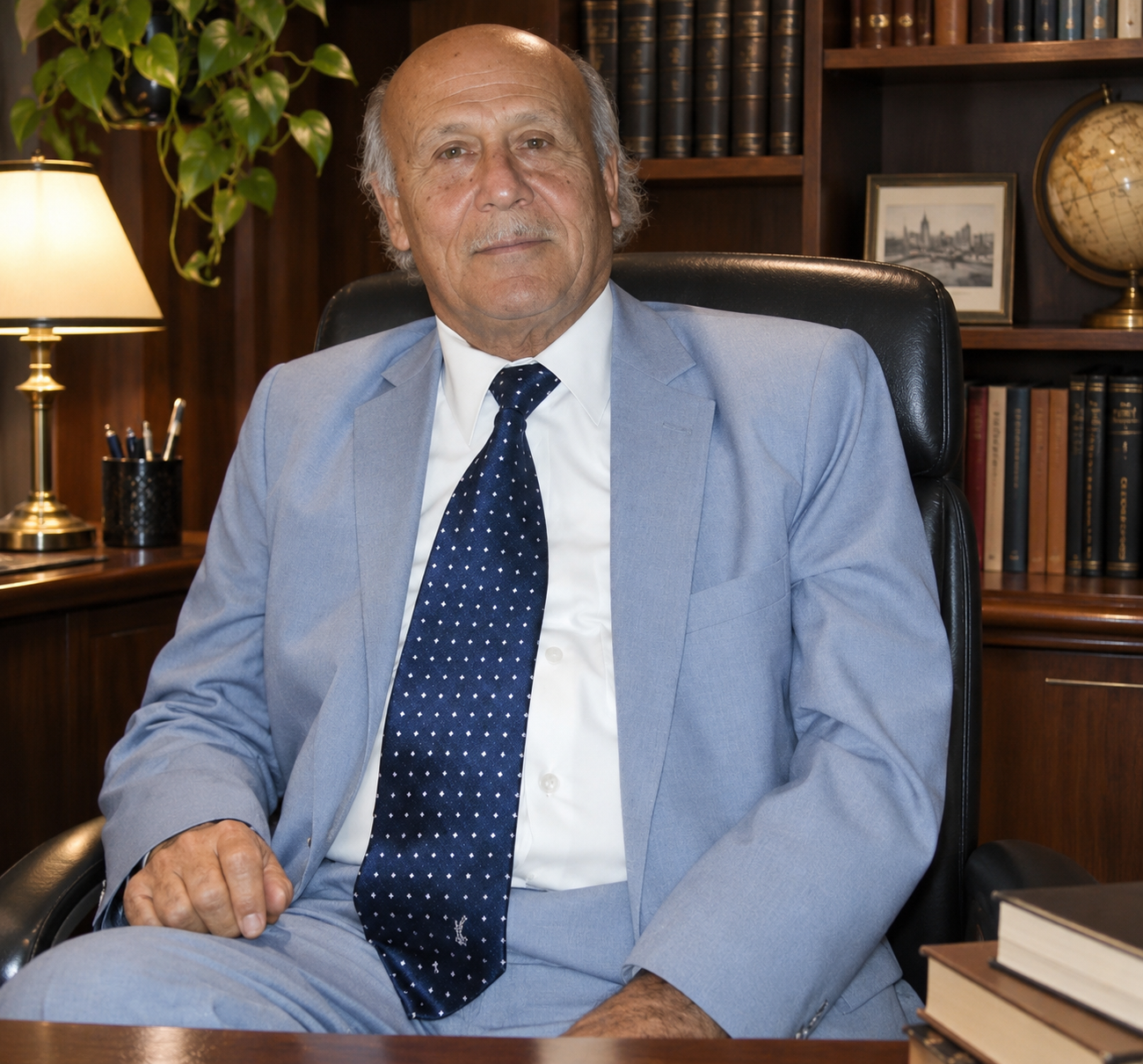
The documented story of the Egyptian writer who faced prison sentences for his literary works, lost his job, received death threats and found a space of international solidarity in Barcelona.
Introduction
In 1988, Egyptian writer Alaa Hamed published a novel entitled Masafa fi Aql Ragul (A Distance in a Man’s Mind). What initially began as a literary work ultimately became the centre of a conflict involving religious institutions, administrative bodies, courts, the media and international human rights organisations.
His case was not limited to a publishing ban. Hamed was arrested, prosecuted and sentenced to eight years in prison. His publisher and the novel’s printer received similar sentences. He subsequently faced another legal proceeding over a second work, Al-Firash (The Bed), which resulted in a further conviction and his imprisonment in 1997.
But the story also includes other elements: a public campaign to discredit him, demands for extreme punishment, death threats, loss of employment, professional isolation within the publishing industry and a prolonged period of legal uncertainty.
The surviving documentation makes it possible to reconstruct much of what happened between 1988 and 1997, as well as the professional and personal consequences suffered by the writer and the reactions his case provoked both inside and outside Egypt.
1988–1990. The Novel That Triggered the Conflict
The first work, Masafa fi Aql Ragul, was published in April 1988.
Its content raised metaphysical questions concerning religion, inherited beliefs, the existence of God and the nature of the prophets.
The book was examined by Al-Azhar’s Islamic Research Academy. The documentation includes administrative correspondence from November 1989 and a religious report dated 6 March 1990.
Al-Azhar’s report considered the work an attack on fundamental religious beliefs and called for legal action and the confiscation of the book. It was not a judicial ruling, but it became an important precedent for the subsequent legal proceedings.
3 March 1990: The Public Accusation Begins
One of the most significant documents is a column written by journalist Ahmed Bahgat and dated 3 March 1990.
Its headline was “Another Salman Rushdie in Egypt.”
Bahgat denounced the novel’s content, claiming that it questioned the existence of God, ridiculed the prophets and attacked religious beliefs.
The journalist concluded that the book could not be considered literature or art, but rather something that should be brought to the attention of society and the Public Prosecutor’s Office.
The publication provides contemporary evidence that the controversy had acquired a public dimension before Hamed’s arrest and the final judicial ruling.
Other newspapers followed a similar editorial line. A publication identified as Al-Muslimoon portrayed Hamed as a new Salman Rushdie and used headlines associating him with atheism and pornography.
However, that same publication also reported a response attributed to the writer: Hamed rejected the comparison with Rushdie and stated that he was not prepared to repent for his literary work.
22 March 1990: Al-Azhar and the Public Dissemination of Its Report
The newspaper Al-Liwa al-Islami published an article entitled “Confiscation of a Book Containing Mockery of Religions and Prophets.”
The newspaper reproduced part of Al-Azhar’s report, portraying the novel as a work of unbelief, heresy and atheism.
This publication is important because it documents how an institutional religious assessment was transferred into the public sphere and disseminated among readers.
The controversy was no longer confined to a dispute between the writer and the administrative authorities: it had become a public campaign of condemnation.
1990–1991. Arrest and First Conviction
Alaa Hamed was arrested in March 1990 and transferred to Tora Prison in Cairo.
He remained in detention for three months and was subsequently released on bail of 2,000 Egyptian pounds.
Several court hearings took place during 1990. On 16 May, according to contemporary documentation, the court heard the defence and agreed to summon representatives of the institutions involved in reviewing the work. Subsequent hearings on 30 May and 6 June were postponed.
On 25 December 1991, he was sentenced to eight years in prison and fined 2,500 Egyptian pounds.
Mohamed Madbouli, the novel’s publisher and distributor, and Fathi Fadl, the person responsible for the printing, were also convicted.
Some publications at the time went further than the actual court ruling. One newspaper clipping presented the writer’s punishment as a matter of death and claimed that imprisonment was not enough for someone who insulted the Prophet.
It is important to distinguish this journalistic rhetoric from the actual judicial decision: the court sentenced Hamed to eight years in prison, not to death.
1991–1992. Religious Controversy and Public Reactions
The events following the conviction reveal the intensity of the conflict between religious groups and defenders of freedom of expression.
One newspaper reported that the president of the Egyptian Writers’ Union was calling for Hamed’s execution. The same document also carried a headline stating that a human rights organisation was defending the author of Masafa fi Aql Ragul.
This contrast is particularly important: the case did not produce a unanimous position within Egypt’s intellectual community.
There were voices demanding extreme punishment, but also organisations and writers who defended freedom of literary creation and questioned the legitimacy of prosecuting an author for ideas expressed in a work of fiction.
On 9 January 1992, the newspaper Al-Liwa al-Islami published a front page featuring a headline quoting Al-Shaarawi calling for a boycott of those who deviated from religion.
The same page included statements by President Mubarak concerning the impossibility of personally issuing a judicial verdict against someone accused of offending religion.
Although this front page does not directly identify Hamed as the subject of all its content, it provides evidence of the religious and political climate surrounding the public debate during those months.
1992. The Second Trial: Al-Firash (The Bed)
On 30 June 1992, Cairo’s Court of Morality issued a new ruling against Hamed concerning the work Al-Firash.
This second case was separate from the first.
The charges focused on the production and possession, for commercial purposes, of printed materials considered indecent and contrary to public morality.
According to the court ruling reproduced in the documentation, 3,000 copies had been prepared.
The printer stated that he had received the manuscript and informed the State Security authorities. The copies were seized before they could be publicly distributed.
The court sentenced Hamed to one year in prison, imposed a financial penalty of 200 Egyptian pounds and ordered the confiscation of the work. Amnesty International would subsequently describe this amount as a fine.
The distinction between the two cases must be clearly maintained:
Masafa fi Aql Ragul: Eight-year prison sentence and a fine of 2,500 Egyptian pounds.
Al-Firash: One-year prison sentence, a fine of 200 Egyptian pounds according to Amnesty International, and confiscation of the copies.
1992–1994. Threats, Publishing Rejection and a State of Uncertainty
Hamed’s situation extended far beyond the judicial proceedings.
One of the most important international sources is a report by the Middle East Times, written by Richard Woffenden and entitled “Eve of the Book Fair – Religious and Literary Establishments Remain at Loggerheads.”
The article describes Hamed waiting at home for a government decision concerning the sentences imposed on him.
The caption accompanying a photograph describes him as “a prisoner in his own home” who continues to write.
The report states that the executive authorities had decided not to enforce either sentence, in an attempt to avoid a greater confrontation between defenders of freedom of expression and conservative religious groups.
It also reports that 62 members of the People’s Assembly had signed a petition requesting an immediate amnesty for Hamed. According to the journalist, the petition had not yet received a response.
The article includes statements from religious officials who described Hamed’s works as harmful to society and demanded measures against the writer.
It also reports a death threat attributed to Islamist preacher Omar Abdel Rahman, which had been circulated through another publication. The quoted statement called for the writer to be killed and his books burned.
The publication further reports that Hamed’s books could not find distributors or bookshops willing to sell them through normal channels.
Meanwhile, the United Nations report E/CN.4/1995/91 records that Hamed lost his job in the Egyptian Tax Authority in July 1994. The reason attributed to the authorities was that the content of Al-Firash reflected opinions incompatible with his responsibilities as a public servant.
1994–1995. Barcelona: The Writer Finds International Support
Hamed’s situation began to attract increasing attention outside Egypt.
In a letter addressed to the Centre Català del PEN, dated 24 October 1994, the writer explained the difficulties he was facing: his convictions, loss of income, publishers’ refusals and fears for his personal safety.
On 6 January 1995, La Vanguardia published an article by Oriol Pi de Cabanyes entitled “Hamed, the Egyptian.”
The journalist reported that the writer had been subjected to three shooting attacks.
An earlier United Nations report had already recorded that Hamed had been the target of an attempted assassination.
During May 1995, Avui and El Periódico published reports about his situation.
Hamed had been invited to Catalonia by the Institució de les Lletres Catalanes, with the collaboration of the Centre Català del PEN.
On 14 June 1995, he presented a text entitled El meu processament (My Prosecution) at the Ateneu Barcelonès.
In this presentation, he described his experiences, challenged the use of the courts to persecute ideas expressed in works of fiction, and defended freedom of thought and literary creation.
The involvement of writers such as Nawal El-Saadawi and Farag Foda, together with the participation of PEN and other cultural institutions, demonstrates that Hamed received intellectual and civil society support in the face of the campaigns against him.
1997. Confirmation of the Second Conviction and Amnesty International’s Intervention
On 25 May 1997, the Cairo Court of Appeal upheld the one-year prison sentence, the fine of 200 Egyptian pounds and the confiscation of Al-Firash.
Hamed was imprisoned.
On 12 June 1997, Amnesty International issued an urgent action recognising him as a prisoner of conscience.
The organisation denounced his imprisonment as a consequence of the peaceful expression of his opinions and called for his immediate and unconditional release.
It also expressed concern about his health, as reports indicated that he was suffering from serious stomach and liver problems and very low blood pressure.
During August 1997, Hamed was released while the final ruling of the Court of Cassation was still pending.
Conclusion: The Persecution of a Writer and the Cost of Freedom of Expression
The story of Alaa Hamed demonstrates that this conflict was not simply a disagreement between literature and religion.
It involved a succession of administrative actions, religious reports, press accusations, judicial decisions, threats and professional consequences.
Hamed faced two separate legal proceedings. In the first, he received an eight-year prison sentence whose enforcement was suspended pending action by the executive authorities. In the second, he received a one-year sentence that was upheld in 1997 and led to his imprisonment.
He lost his job at the Egyptian Tax Authority, experienced difficulties publishing and distributing his works, and endured an environment of threats and isolation.
The documentation also shows that certain groups demanded even more extreme punishments, including the writer’s execution, while human rights organisations, intellectuals and members of parliament attempted to secure his release.
The involvement of PEN Català, Catalan cultural institutions, the United Nations and Amnesty International enabled the case to transcend Egypt’s borders.
The story of Alaa Hamed cannot be reduced to the biography of a convicted writer. It is also a documented case concerning the relationship between religious institutions, political power, the justice system and freedom of literary creation.