
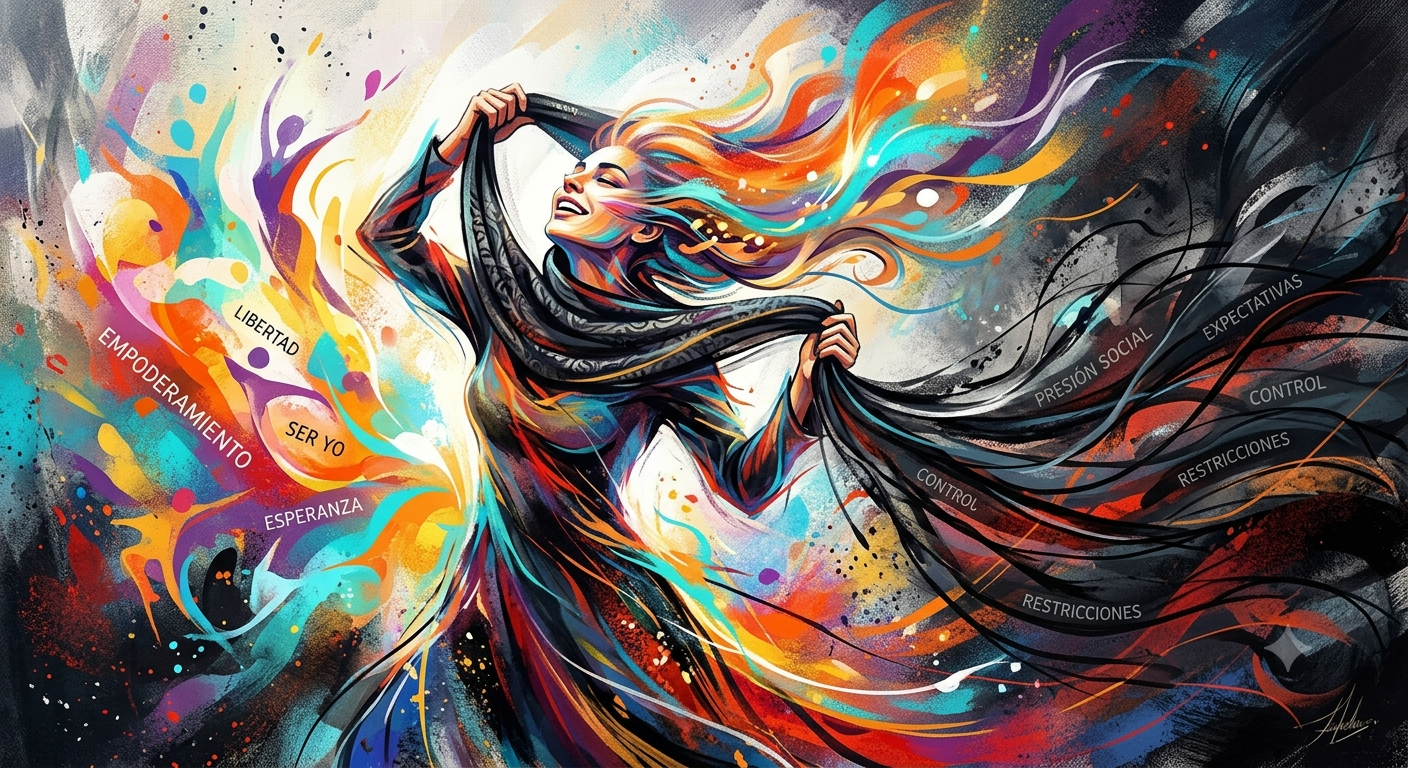
The Hijab: The Fabric That Divides Europe
Some objects may seem insignificant, yet they have the power to divide families, parliaments, and entire continents. The hijab is one of them.
We are talking about a headscarf, a piece of fabric weighing barely a few grams. And yet few symbols spark as much debate in twenty-first-century Europe.
For some, it represents religious freedom. For others, it is a symbol of inequality between men and women. For some Muslims, it is a religious obligation; for others, a cultural tradition.
And for millions of Europeans, one question remains unanswered: Can a liberal democracy coexist with a garment that many consider incompatible with equality?
Welcome to the debate of the century.
The Origins: Long Before Islam
Here is the first surprise: Islam did not invent the veil.
Long before Muhammad, women wore different types of veils in Mesopotamia, Persia, Greece, and the Roman Empire. More than 2,500 years ago, covering one’s head was a symbol of status, modesty, or social belonging.
In fact, in some ancient societies, free women were required to cover their heads, while enslaved women were forbidden from doing so. In other words, the veil began as a kind of “social uniform.”
When Islam emerged in the seventh century, many of these customs already existed.
What Does Islam Actually Say?
This is where one of the greatest debates in the Muslim world begins.
The Quran refers to modesty and mentions the use of the khimar (a type of covering or veil), but it does not precisely describe the modern hijab as we know it today.
Over the centuries, Islamic jurists and schools of thought interpreted these texts in increasingly strict ways.
And so we arrive at the twenty-first century, where we find practically everything: Muslim women who do not wear a veil, women who wear the hijab, women who wear the niqab, women who wear the burqa, and women who believe none of these garments is obligatory.
In other words, if you gather ten Muslims and ask them about the hijab, you will probably get eleven different opinions.
The Hijab Arrives in Europe
For decades, the hijab was barely visible on European streets. However, immigration and the growth of Muslim communities have changed the landscape of many cities.
Today, it is common to see it in Madrid, Barcelona, Paris, Brussels, Berlin, and London. And with its arrival have come the questions.
Those Who Defend It
Supporters of the hijab usually make the following argument: “It is a personal choice.” Many women say they wear it freely.
They explain that it is part of their identity, gives them spiritual peace, expresses their faith, and helps them feel connected to their community.
From this perspective, banning the hijab would be a contradiction, because a liberal democracy is based precisely on allowing people to make decisions about their own lives.
The question is simple: If a woman can choose to have a dragon tattooed on her back, why shouldn’t she be able to choose to wear a headscarf?
The Critics Respond
However, this is where the other side of the debate emerges. Many critics raise an uncomfortable question: Is it a completely free choice when millions of women around the world face social, family, or even legal pressure to wear it?
There is a reality Europe cannot ignore. In countries such as Afghanistan and Iran, millions of women have fought, and continue to fight, against the imposition of the veil. And that changes the conversation.
For many Europeans, the problem is not an adult woman who chooses to wear a hijab. The problem arises when:
-
Six- or seven-year-old girls wear it.
-
Family pressure exists.
-
It becomes a social obligation.
-
It is used as a marker of separation between men and women.
Because then we stop talking about freedom and start talking about rights.
The Case of Girls
This is probably the most sensitive debate of all.
Imagine two eight-year-old girls. One wears a cartoon T-shirt. The other wears a hijab. The question many people ask is: Should a child have a religious obligation related to sexual modesty?
It is an issue that generates enormous tensions in Europe.
Some respond: It is a family tradition. Others counter: Childhood should be free from symbols associated with sexualisation or the separation of the sexes.
And, as always, Europe finds itself caught in the middle, trying to find an answer.
Is It Compatible with Liberal Democracy?
This is the big question.
Liberal democracy is based on four fundamental principles:
-
Individual freedom.
-
Equality between men and women.
-
State neutrality.
-
Protection of fundamental rights.
So, is the hijab compatible with it? The most honest answer is: it depends.
Yes, if…
-
It is a free choice.
-
There is no pressure.
-
The woman can remove it whenever she wants.
-
It does not limit her opportunities.
No, if…
-
It is compulsory.
-
It is imposed on minors.
-
It becomes a tool of social control.
-
It restricts equality between men and women.
The problem is that nobody can enter another person’s mind to know where choice ends and pressure begins.
The European Experiment
Europe is conducting a gigantic social experiment. France has adopted a stricter interpretation of secularism, while other countries have been more flexible. Meanwhile, millions of people live alongside one another every day, trying to find a balance between diversity and integration.
The situation produces scenes our grandparents could never have imagined: parliamentary debates about headscarves, television programmes devoted to the subject, and courts ruling on veils.
If someone had explained this in 1950, it would probably have sounded like a science-fiction film.
Europe’s Problem
The real problem is not the hijab. It is what it represents.
For some Europeans, it symbolises the expansion of religious identity, difficulties with integration, and a traditional view of women.
For others, it symbolises diversity and individual rights.
The reality is that the same object can mean two completely different things depending on who is looking at it. And that explains why the debate seems endless.
Possible Solutions
Europe will have to make decisions over the coming decades. Some commonly proposed ideas include:
1. Protect the freedom of adult women.
An adult woman should be able to decide how to dress, provided there is no coercion.
2. Open the debate about minors.
Many believe there should be a specific discussion about the use of the hijab by young girls.
3. Combat social pressure.
The key is not to ban it, but to ensure that any woman can say, “I want to wear it” or “I don’t want to wear it” without facing consequences.
4. Support the development of a European Islam.
An increasing number of voices advocate an Islam compatible with European democratic values: an Islam in which individual freedom takes precedence over community pressure.
Conclusion
The hijab will continue to serve as a mirror in which twenty-first-century Europe reflects its own contradictions between secularism, multiculturalism, and individual rights.
The democratic answer does not lie in the state imposing an official dress code, but in ensuring that every woman has the educational, economic, and legal means to make decisions about her body and her life in complete freedom.