
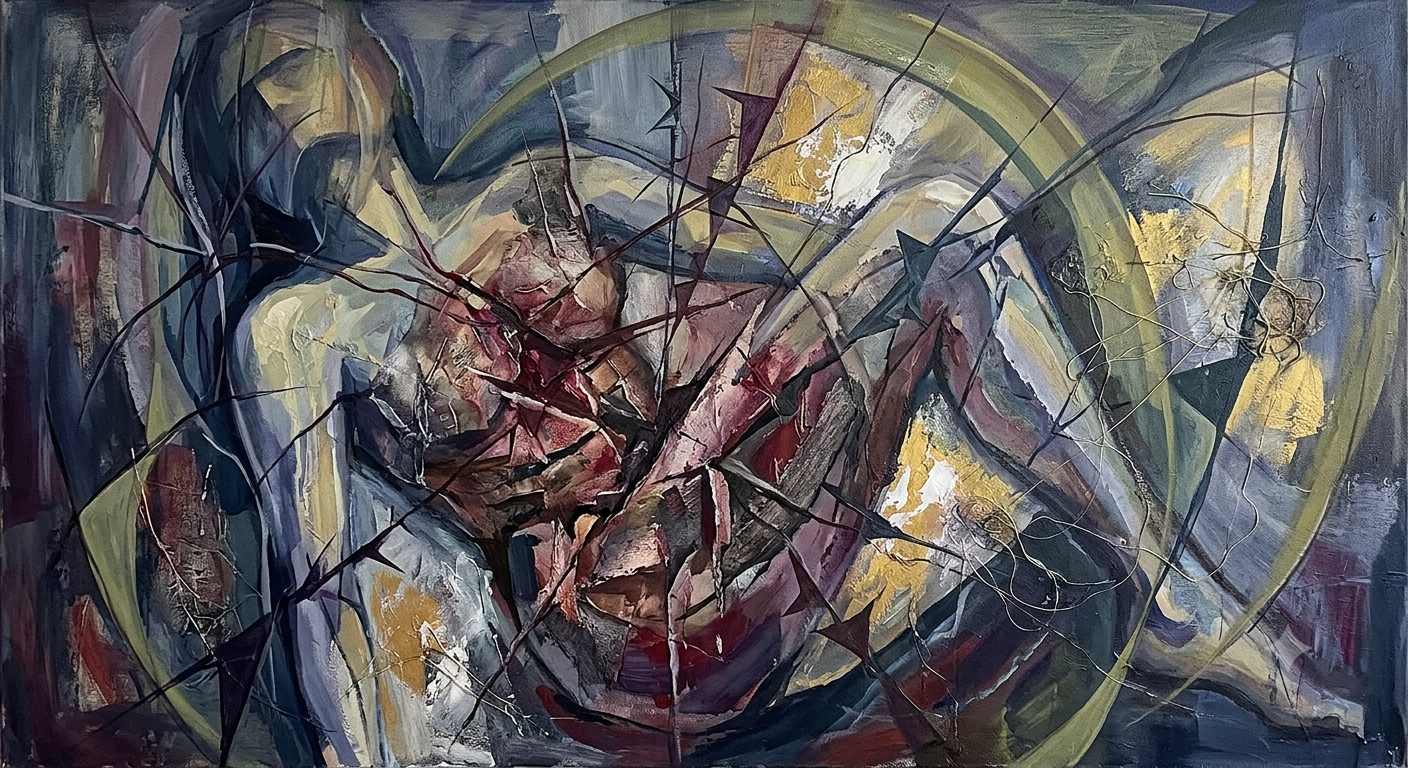
The Silent Wound: The History of Female Genital Mutilation and Europe’s Challenge
Imagine for a moment that a six-, seven-, or eight-year-old girl enters a room surrounded by women from her family. They tell her that today she will become a respectable woman. She does not fully understand what is happening. She is afraid. Hours later, her life will have changed forever.
This is not a story from the past. It is still happening today.
Female circumcision, officially known as female genital mutilation (FGM) or cutting, affects millions of women and girls around the world. It is one of the most devastating and widespread violations of women’s human rights and bodily integrity in human history.
However, there is considerable confusion about its origins. Many people believe it is an exclusively Islamic practice, but the reality is more complex.
What Exactly Is Female Genital Mutilation?
The World Health Organization defines female genital mutilation as any procedure involving the partial or total removal of the external female genitalia, or any injury to the female genital organs for non-medical reasons.
Put simply, it means cutting or damaging healthy parts of a girl’s or woman’s body without any medical necessity.
There are several types:
-
Partial or total removal of the clitoris.
-
Removal of the clitoris and the labia minora.
-
Infibulation: the most extreme form, in which the vaginal opening is narrowed through stitching.
-
Other injuries, cuts, pricks, or burns.
Most victims are girls between the ages of 5 and 15, although in some places the practice is performed even on babies.
Is It an Islamic Practice?
This is where the great debate begins.
Female genital mutilation predates Islam. There is evidence that it was already practised more than 2,000 years ago in some parts of northeastern Africa, particularly Egypt, long before the birth of Muhammad.
The Quran neither commands nor mentions female genital mutilation. There is no Quranic verse requiring the practice.
So why is it associated with Islam?
Because over the centuries, some Muslim communities adopted this custom, and certain local religious leaders justified it using interpretations of some hadiths (accounts attributed to Muhammad) whose authenticity and validity are disputed by many scholars.
Today, most major Islamic institutions around the world consider female genital mutilation not to be a religious obligation.
The conclusion is uncomfortable for all sides: female genital mutilation did not originate with Islam, but certain Muslim communities have contributed to maintaining it for centuries.
Where Is It Still Practised?
Female genital mutilation is concentrated mainly in a belt stretching across Africa.
Among the most affected countries are Somalia, Guinea, Djibouti, Egypt, Sudan, Mali, Sierra Leone, Eritrea, Ethiopia, Gambia, and Burkina Faso.
Cases also occur in Indonesia, some regions of Iraq, Yemen, specific communities in India and Pakistan, and migrant populations in Europe and the Americas.
It is estimated that more than 230 million women and girls currently live with some form of female genital mutilation.
Why Does It Continue?
This is perhaps the most difficult question.
Families who practise it do not usually believe they are causing harm. Many sincerely think they are protecting their daughters.
Among the most common reasons are preserving virginity, reducing female sexual desire, facilitating marriage, maintaining family traditions, gaining social acceptance, mistaken beliefs about hygiene and purity, and local religious interpretations.
In many communities, an uncut woman may be considered “impure” or may have difficulty finding a husband. In other words, the problem is not solely religious. It is cultural, social, and collective.
The Consequences for Women
Female genital mutilation leaves physical and psychological wounds that can last a lifetime.
Immediate consequences include extreme pain, bleeding, infections, risk of death, and psychological trauma.
Long-term consequences include chronic pain, urinary problems, complications during pregnancy, more dangerous childbirth, increased risk of infections, anxiety and depression, and difficulties in sexual relationships.
Some women remember that day with absolute clarity even fifty years later. Many describe feeling as though they had lost a part of themselves.
What Is Happening in Europe?
Europe has discovered that this problem does not automatically disappear when a family crosses a border.
Thousands of European girls live in families originating from countries where the practice remains common. In some cases, girls are taken to their country of origin during the holidays to undergo mutilation and return weeks later to their schools in Paris, Madrid, Berlin, or Stockholm. It is estimated that more than 600,000 women living in Europe have undergone FGM, and thousands of girls are at risk of experiencing it.
This has forced many European countries to take action: criminalising female genital mutilation, prosecuting cases carried out abroad, training doctors, teachers, and social workers, running prevention campaigns, and providing psychological support to victims.
Europe faces a delicate debate here: Where does respect for a cultural tradition end, and the defence of fundamental rights begin?
The answer from most European democracies is clear: no tradition can justify permanently injuring a minor’s body.
Europe’s Great Dilemma
Europe finds itself caught between two fears.
On the one hand, there is the fear of appearing intolerant or stigmatising entire communities. On the other, there is the fear of looking the other way while thousands of girls remain at risk.
The challenge is to find a balance: defend human rights without demonising entire communities, distinguish between religion and tradition, protect minors, and listen to the women affected.
What Could the Solution Be?
There is no magic solution, but several measures have proved effective:
Education, enforcement of the law, and listening to survivors.
An Uncomfortable Question
A society can be judged by many things, but few reveal as much about it as the answer to one very simple question:
What did we do when we learned they were suffering?