Financial Innovation or an Ideological Trojan Horse?
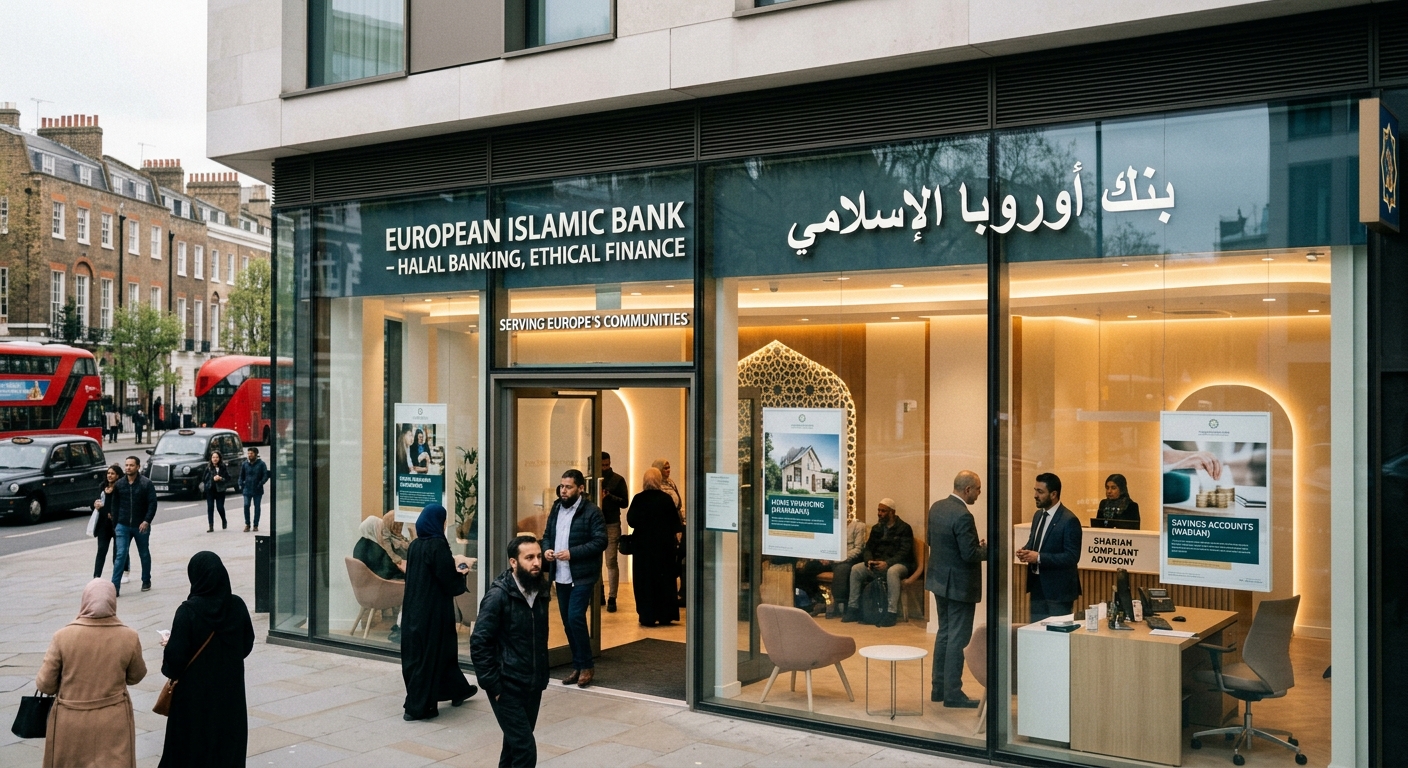
Islamic banking is arriving in Europe with an attractive promise: to offer a way of managing money without interest, with investments considered ethical and products tailored to Muslim customers.
So far, there is nothing particularly unusual about this. Europe is a pluralistic society, and its citizens have the right to seek financial services that are compatible with their beliefs.
But there are questions that deserve closer investigation:
What exactly is Islamic banking?
Where do its principles come from, and who interprets them?
Is it simply a financial alternative, or can it also become a tool of religious and political influence?
What happens when the rules of a religious tradition come into contact with European laws, values and financial regulations?
Who ensures that the “Islamic” label does not conceal economic interests, networks of influence or a lack of transparency?
The issue is not whether Muslims should have access to financial services. The issue is whether every financial model should be examined according to the same standards of transparency, legality, consumer protection and individual autonomy.
1. What Is Islamic Banking?
Islamic banking is a financial system that seeks to organise its operations in accordance with certain principles of Sharia, that is, the interpretation of Islamic law.
There is no single interpretation of Sharia. Different legal schools, religious authorities and specialised boards may disagree over whether a financial product is acceptable.
Its best-known principles include:
-
Prohibition of riba: generally understood as a prohibition on financial interest.
-
Prohibition of maysir: rejection of gambling and certain forms of speculation.
-
Restrictions on financed activities: for example, alcohol, gambling and certain sectors considered impermissible.
-
Profit-and-loss sharing: at least as an ideal principle of the model.
The French government summarises these principles as including the prohibition of interest, certain forms of uncertainty and speculation, sector-specific restrictions, and the sharing of profits and losses.
An important clarification
Islamic banking does not necessarily mean that customers pay no costs when borrowing money.
For example, in conventional financing, a bank lends €100,000 and charges interest. In a murabaha transaction, the bank may purchase a property and sell it to the customer for €120,000, with payment deferred.
On paper, this is not an interest-bearing loan but a sale with a profit margin.
The critical question is obvious: if the customer ultimately pays an amount similar to what they would pay under a conventional loan, are we looking at a genuine economic difference, or simply a different legal and religious structure designed to achieve a similar outcome?
The answer depends on the contract, the risks assumed by the parties and the religious interpretation applied. The UK Treasury’s own documentation describes murabaha as the purchase and subsequent resale of an asset at a higher price, payable on a deferred basis.
2. Origins: From the Prohibition of Interest to the Modern Financial Industry
Islamic banking did not suddenly appear in European banks. Its foundations lie in Islamic religious and legal tradition, particularly the prohibition of riba.
However, modern Islamic banking, as an organised industry, is relatively recent.
Early contemporary experiments
During the twentieth century, some Muslim economists and intellectuals began proposing an alternative to the conventional financial system. Their aim was to create institutions that respected Islamic principles while remaining capable of operating within a modern economy.
One of the most frequently cited examples is Mit Ghamr, in Egypt, during the 1960s. Later, in the 1970s, larger Islamic financial institutions emerged in Muslim-majority countries amid rising oil revenues and the expansion of projects focused on Islamic identity and renewal.
In the following decades, Islamic banks, investment funds, Islamic insurance companies and sukuk markets developed.
Two oversimplifications should be avoided here: Islamic banking is not exclusively an invention of Gulf governments, nor is it simply an old version of conventional banking with no meaningful differences.
It is a modern industry combining religious traditions, financial engineering, commercial interests and, in certain contexts, political or identity-based projects.
However, these elements should not automatically be conflated. An institution that uses Islamic criteria is not, simply for that reason, a political or extremist organisation.
3. How Does It Work? The Most Common Products
To understand the true scope of Islamic banking, we must examine its products, not just its advertising.
Murabaha: Buying and Reselling
The bank acquires an asset and resells it to the customer with a previously agreed profit margin. Payment may be made in instalments.
Musharaka: Partnership
The bank and the customer participate in an investment or share ownership of an asset. Under certain models, the parties share profits and losses.
Sukuk: Investment Securities
These are financial instruments linked to assets, rights or projects. They are often presented as an alternative to conventional bonds.
Ijara: Leasing
This arrangement is based on renting or obtaining the usufruct of an asset. Under some structures, the customer may eventually acquire ownership.
These contracts do not necessarily involve the same risks or provide the same level of protection to customers. Therefore, it is not enough for a product to be advertised as “interest-free” or “Sharia-compliant”. Its specific terms and conditions must be examined.
4. Why Is Islamic Banking Attractive in Europe?
Its expansion in Europe is driven by several factors that should not be conflated.
A. Legitimate Commercial Demand
Some European Muslims want financial products that are compatible with their religious convictions. Some avoid interest for spiritual reasons; others seek investments that exclude certain sectors.
In a society that protects religious freedom, it is reasonable for businesses to offer products to different consumer groups, provided they comply with the law.
The question is not why a Muslim customer wants an Islamic product. The question is whether the product is clearly explained, whether its risks are understandable and whether the customer’s decision is genuinely free.
B. The Attraction of International Capital
European financial centres also want to attract investment from Gulf countries, international funds and wealthy investors interested in Sharia-compliant instruments.
The United Kingdom and Luxembourg have developed frameworks that facilitate these transactions. Luxembourg, for example, has worked with Islamic funds and sukuk issuances within its general financial framework.
C. Competition Between Financial Centres
Islamic banking can become another segment in the global competition to attract capital.
London is not competing only with Paris, Frankfurt or Luxembourg. It is also competing with financial centres in the Middle East and Asia.
Therefore, when a government facilitates the entry of Islamic financial products, it is not necessarily trying to promote a religion. It may be seeking investment, jobs, financial activity and international connections.
However, declared economic motives do not eliminate the need to examine the political, cultural and regulatory consequences.
5. Europe: Adapting to the Legal System, Not Replacing It
This is where a fundamental issue arises.
Islamic banking can operate in Europe only within the applicable European and national legal framework. An institution cannot use religion as an excuse to disregard banking, tax, employment, consumer protection or anti-money-laundering regulations.
In Luxembourg, for example, the financial supervisory authority states that Sharia-compliant funds do not have a separate regulatory regime. They must meet the same legal and regulatory requirements as other funds, alongside any applicable specific disclosure and compliance requirements. A 2026 update includes more detailed references to anti-money-laundering measures, terrorist financing and Sharia boards.
The model should be straightforward: freedom to offer religious financial products, combined with an obligation to comply with common laws.
This means that an Islamic financial institution must answer questions such as:
-
Who authorises and supervises it?
-
What protection does the customer’s money have?
-
What happens if the institution becomes insolvent?
-
How are fees and profits calculated?
-
What conflicts of interest exist between the bank and its religious advisers?
-
What mechanisms are available for complaints?
-
Are the same anti-money-laundering and counter-terrorist-financing regulations applied?
The answer should not depend on whether a bank has an Islamic, Christian, secular or any other identity. Financial supervision should be religiously neutral and rigorous in its assessment of risk.
6. The Ideological Dimension: Where Does the Problem Begin?
The expression “Islamic banking” can refer to very different things.
For some people, it simply means organising their finances in accordance with their beliefs. For others, it forms part of a broader vision of society in which religion should guide not only private life but also the economy, the law and public institutions.
These two positions are not necessarily identical.
Private Religion and Social Projects
A customer may want an interest-free mortgage for personal reasons without supporting any political project. Similarly, a bank may offer Islamic products as a commercial strategy without pursuing ideological objectives.
However, it is also legitimate to investigate whether certain actors use finance to:
-
Increase a community’s economic dependence on religious organisations.
-
Create networks of influence between financial institutions, associations and religious centres.
-
Promote a closed community identity in opposition to the rest of society.
-
Link access to certain services to obedience to religious authorities.
-
Provide funding to organisations whose structures, activities or foreign funding warrant closer scrutiny.
These possibilities should not be presented as general facts or attributed to Islamic banking as a whole. They are lines of investigation that require specific evidence.
The question is not, “Is Islamic banking ideological?” A more precise question is: in which cases does a religiously based financial service simply meet commercial demand, and in which cases could it become an infrastructure for influencing a community and its institutions?
Answering this requires examining ownership, funding sources, Sharia boards, institutional connections, donations, governance mechanisms and the transparency of each individual case.
7. The Question of Sharia Boards
One of the most distinctive features of Islamic finance is the involvement of religious experts who assess whether products comply with certain Sharia principles.
These boards can provide specialised knowledge of the religious rules an institution wishes to apply. However, they also raise governance questions.
Who Supervises the Certifier?
Imagine that a bank pays a board to assess its products.
The bank needs the certification to market its product as Sharia-compliant. The board, in turn, may depend financially on the bank or work simultaneously for other institutions.
This does not, in itself, prove that any wrongdoing has occurred. However, it creates a question familiar across many regulated industries: the risk of conflicts of interest.
It would be reasonable to require:
-
The identity and qualifications of board members.
-
Disclosure of their remuneration or, at a minimum, the rules governing their independence.
-
An explanation of the criteria used.
-
Procedures for resolving conflicts.
-
A clear separation between religious certification and the legal authorisation of a product.
A product may be considered compliant with a particular religious interpretation while still carrying significant financial risks. Religious certification does not replace prudential supervision, auditing or consumer protection.
8. One of the Major Contradictions: No Interest, but Similar Costs?
This is one of the issues that deserves the closest attention.
The stated aim of Islamic banking is to avoid interest (riba). However, some products use structures that can produce an economic cost similar to that of conventional financing.
In a murabaha transaction, for example, the bank purchases an asset and resells it at a profit. In certain transactions, that margin may be calculated using benchmarks employed in conventional financial markets.
This gives rise to a familiar criticism: some transactions change the legal form and vocabulary while preserving a similar economic logic.
This criticism must be presented accurately.
Not all Islamic transactions are the same.
The fact that a product has a cost similar to interest does not automatically prove that it violates its religious criteria.
Some supporters of the model argue that the difference lies in the nature of the contract, ownership of the asset and distribution of risk.
Critics question whether these differences are substantial or whether, in certain cases, they mainly serve to adapt the transaction to a religious prohibition.
The underlying question is whether Islamic banking is developing a financial alternative with a different distribution of risk, or whether, in some segments, it is creating complex ways of reproducing the outcomes of conventional banking.
The International Monetary Fund has noted that the development of Islamic finance offers potential opportunities but also presents challenges relating to regulation, supervision, risk management, deposit protection and the functioning of sukuk markets.
9. Economic and Financial Shadows
Islamic banking is not free from the problems affecting the rest of the financial sector. In addition, its specific structures can create further difficulties.
A. Contractual Complexity
A transaction may involve several sales, leases, intermediary companies or financial vehicles.
The more complex the contract, the harder it may be for a consumer to understand what they are buying, what they are paying, who assumes the risk and what happens in the event of default.
Complexity is not necessarily illegal or exclusive to Islamic finance, but it requires particularly clear explanations.
B. Liquidity Risk
Banks need to be able to meet customer withdrawals and fulfil their obligations. Some Sharia-compliant instruments cannot be used in exactly the same way as conventional instruments to manage liquidity.
This can complicate the management of financial institutions, especially during periods of financial stress.
C. Differences in Interpretation
A product accepted by one religious board may be rejected by another.
This can lead to:
-
A lack of uniformity between countries.
-
Difficulties marketing products across different markets.
-
Confusion among customers.
-
Additional compliance and certification costs.
D. Reputational Risk
The word “Islamic” can be used as a source of trust. However, a religious label does not, by itself, guarantee that an investment is safe, profitable or ethical in every respect.
A bank may comply with certain religious criteria and still offer a product that is unprofitable, complex or unsuitable for a particular customer.
10. Can It Become a Tool of Foreign Influence?
This is probably the most sensitive aspect of the sector.
Europe receives investments, capital and financial services from numerous countries. This is not an anomaly; it is part of the global economy.
The problem arises when a financial transaction is combined with political dependencies, networks of influence or a lack of transparency.
For example, a journalistic or institutional investigation could examine:
-
Who provided an institution’s initial capital.
-
Whether links exist with foreign governments, state funds or major business groups.
-
Which religious or social organisations maintain relationships with the institution.
-
Whether profits fund activities unrelated to its financial operations.
-
Whether mechanisms exist to prevent the financing of illegal activities.
-
Whether institutions publish sufficient information about their ownership and governance structures.
However, a fundamental distinction must be maintained: a fund originating in a Muslim-majority country is not automatically a tool of Islamisation. An investor from the Gulf should not be considered suspicious because of their nationality or religion. And a financial institution cannot be accused of pursuing political objectives without evidence.
Influence Does Not Always Operate Through Direct Orders
In some cases, influence may be more indirect. It can occur through:
-
Financial dependence.
-
Funding for institutions.
-
Sponsorship of events and programmes.
-
The promotion of certain representatives as spokespeople for a community.
11. What About Equality and Individual Freedom?
Europe must protect religious freedom, but it must also protect freedom of conscience, including the freedom not to practise a religion, to change one’s beliefs or to reject the authority of a religious leader.
This raises a question often omitted from commercial brochures: can a person of Muslim background access financial services without having to accept a particular religious interpretation?
The answer should be yes.
A Muslim person may be practising, non-practising, reformist, secular, atheist or critical of certain interpretations of religion. There is no single Muslim experience.
Therefore, it would be unacceptable for a financial or religious community to present one particular interpretation as mandatory for all Muslims.
Islamic banking can offer an option. It should not become a mechanism of social pressure.
12. What About Women? An Issue That Should Not Be Avoided
Financial products should also be assessed from the perspective of equal rights.
In commercial terms, women must be able to enter into contracts, invest, borrow, open accounts and manage their assets under the same legal conditions as men, in accordance with the applicable legislation.
The question is not whether all Islamic financial institutions discriminate against women. There is no basis for making that claim in general.
The issue is more specific: what happens when a religious interpretation applied by an institution considers that men and women should have different economic roles?
In Europe, contractual terms and the provision of financial services must comply with anti-discrimination legislation and consumer protection rules.
It is also worth investigating whether products are marketed differently to men and women, whether internal restrictions exist or whether a vision of women’s economic dependence is being promoted.
A religious label cannot be used to justify discrimination that violates the law.
13. Is It an Ethical Alternative or a Marketing Strategy?
Islamic banking is often presented as a more ethical form of financing because it prohibits certain activities and, in theory, links money to the real economy.
Some of these characteristics may also appeal to people who are not Muslim:
-
Avoiding investments in certain sectors.
-
Linking financing to real assets.
-
Promoting a closer relationship between investment and economic activity.
-
Rejecting certain speculative practices.
However, we should avoid an automatic conclusion: being Sharia-compliant does not necessarily mean being more ethical in every respect.
An investment may avoid alcohol and gambling while still having problems involving transparency, labour impact, contractual terms, environmental consequences or governance.
Financial ethics should not be reduced to a list of permitted and prohibited sectors. It should also include questions about labour rights, corruption, transparency, equality, environmental impact and the financing of illegal activities.
The true test of ethical banking is how it behaves when its economic interests conflict with its stated principles.
14. The European Approach: Neither Prohibition nor a Blank Cheque
Europe should avoid two mistakes.
First Mistake: Prohibiting It Out of Prejudice
Rejecting any Islamic financial product solely because of its name or religious origins would be incompatible with economic and religious freedom.
Muslim customers cannot all be treated as though they were part of a political project. Nor can a religious institution be assumed to be illegal or dangerous simply because it is religious.
Second Mistake: Accepting Without Scrutiny
The opposite mistake is to assume that anything presented as “inclusion”, “diversity” or “religious freedom” is beyond critical examination.
Inclusion does not eliminate the need for supervision. Diversity does not replace transparency, and religious freedom cannot be used to evade common laws.
The standard should be the same for all institutions: the same law, the same supervision, the same consumer protection and maximum transparency regarding ownership, money and institutional relationships.
If a bank meets these requirements, there is no reason to demand its prohibition because of its religious identity. If it does not, it must answer to the authorities like any other institution.
15. What Should Europe Investigate?
If Europe wants to develop an open and secure financial market, it should pay attention to several issues.
Ownership transparency: knowing who controls institutions and who provides their capital.
Independence of religious boards: preventing conflicts of interest and publishing certification criteria.
Consumer protection: explaining costs, risks and the consequences of default in understandable language.
Anti-money-laundering measures: applying effective controls to all institutions, regardless of their religious identity.
Individual freedom: preventing financial services from becoming instruments of religious or community pressure.
Investigation of foreign connections: examining relationships with foreign governments, funds and organisations when documented indications of undue influence exist.
European regulation must focus on actual risks. It is not enough to rely on an institution’s good reputation, but it is equally unreasonable to build generalised suspicions around its religious identity.
16. The Uncomfortable Question: Who Defines What Is “Islamic”?
Islamic banking raises an issue that goes beyond money.
When an institution labels a product “Sharia-compliant”, it invokes a religious standard. But who has the authority to define that compliance?
A board of experts? A legal school? An international institution? A national religious authority? The bank itself?
And if different interpretations exist, are consumers aware of those differences?
This question matters because the term “Islamic” can appear to offer an absolute guarantee. In reality, however, it may conceal complex legal and religious debates.
A product may be considered acceptable by one board and questioned by another. A contract may receive certification, but that does not mean all Muslims consider it legitimate.
Transparency requires explaining the interpretation being used rather than presenting it as the only possible one.
Conclusion: A Financial Opportunity That Requires Democratic Oversight
Islamic banking can be a legitimate commercial activity. It can offer products to customers who wish to adhere to their religious convictions and attract investment into European markets.
It can also contribute contractual innovation, new forms of financing and greater competition. But none of these possibilities justifies an absence of scrutiny.
In the European context, it cannot be separated from its political and ideological dimension. The introduction of religious committees into the banking sector and the flow of capital subject to theological conditions raise legitimate questions about preserving secular frameworks, regulatory transparency and institutional autonomy across the continent.
Islamic banking must be examined like any other financial activity, in terms of its transparency, risks, impact, economic connections and compliance with the law. At the same time, Europe must avoid the prejudice of treating everything with a Muslim identity as suspicious.
The real debate is not about choosing between a blanket prohibition and unconditional acceptance. It is about building a system in which religious and economic freedom coexist with equality before the law, independent supervision and the protection of individual freedom.
The final question is this: do we want a banking system that offers products compatible with its customers’ beliefs, or are we allowing certain financial structures to become new networks of authority and influence without sufficient transparency?
The answer should be based neither on fear nor on complacency. It should be based on data, contracts, audits, ownership records, supervision and verifiable facts.
Because in a liberal democracy, the freedom to believe must not become an obligation to obey, and the freedom to do business must not become permission to escape democratic oversight.
Sources
International Monetary Fund. HM Revenue & Customs, United Kingdom. GOV.UK. economie.gouv.fr. BSP. European Central Bank